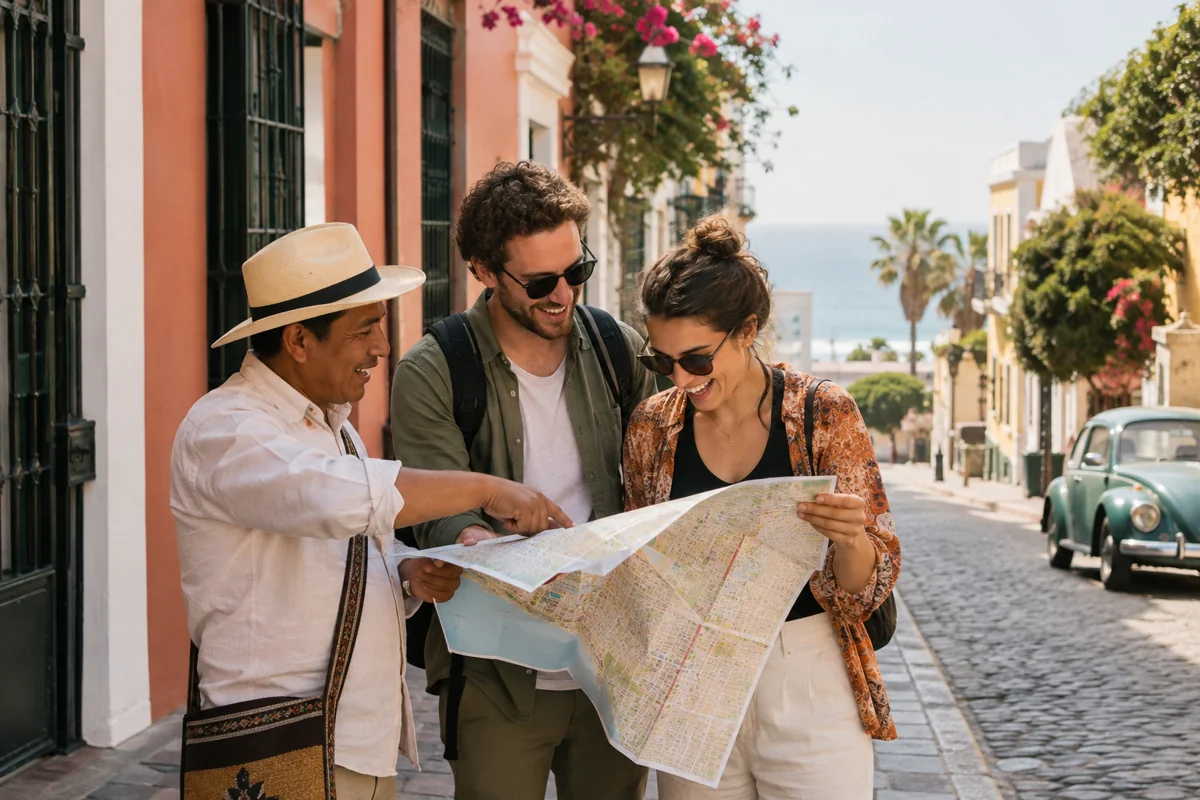
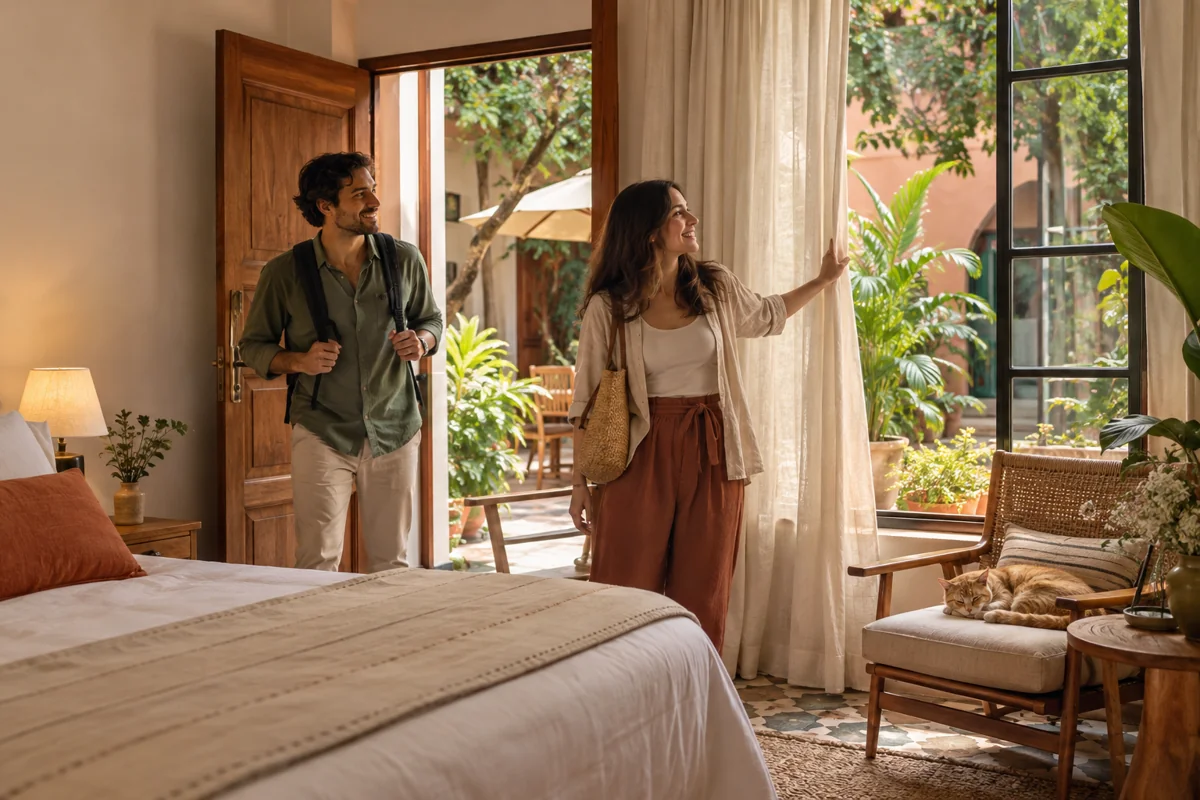
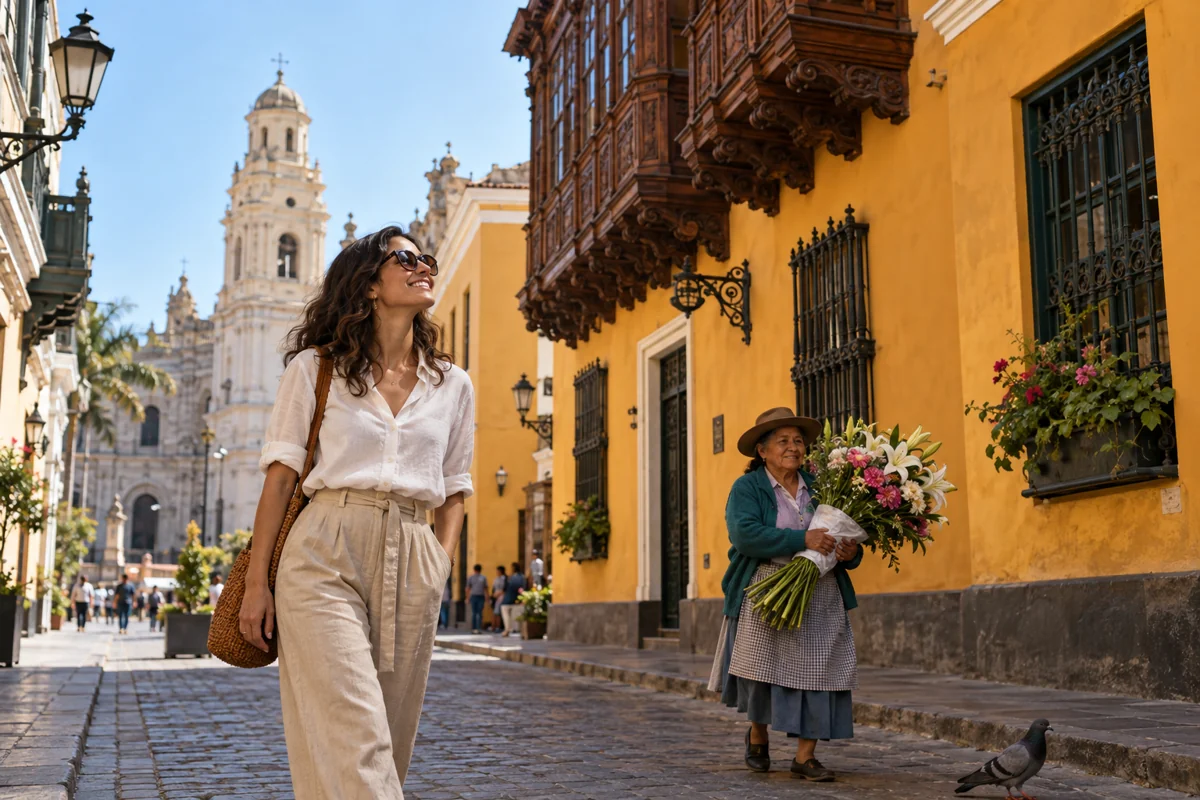
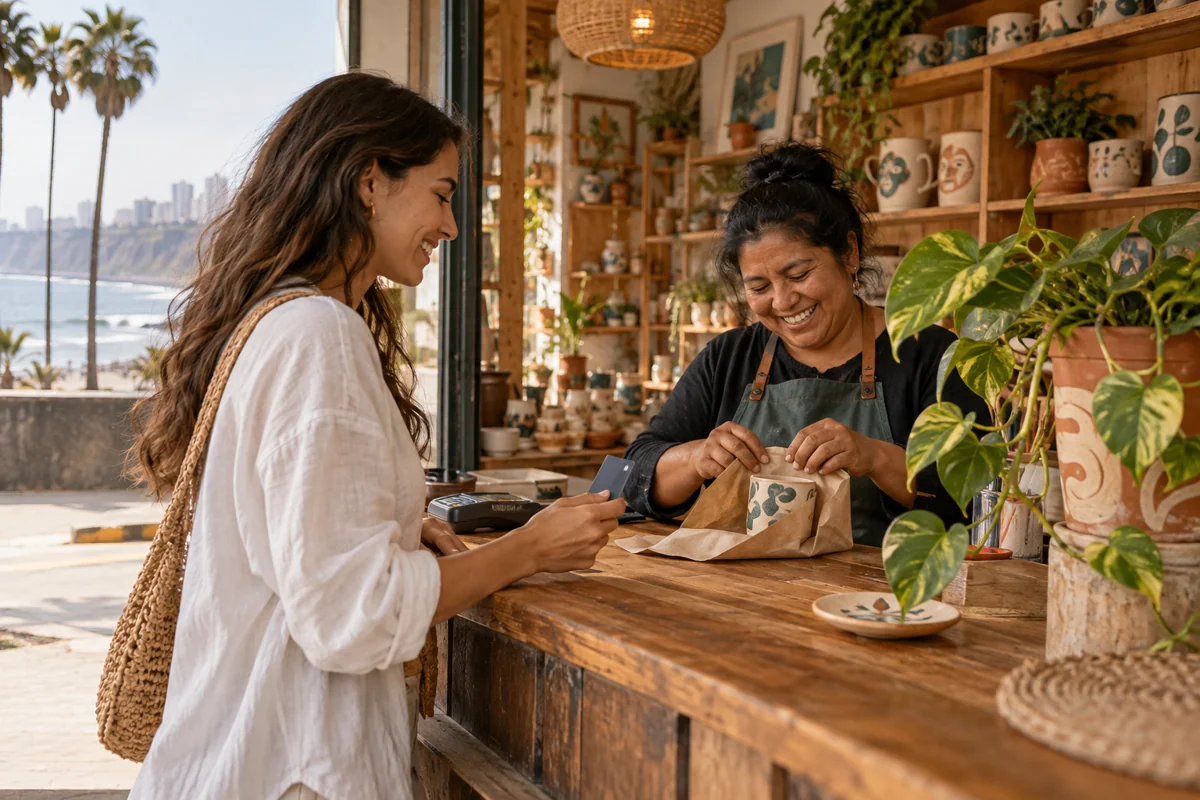
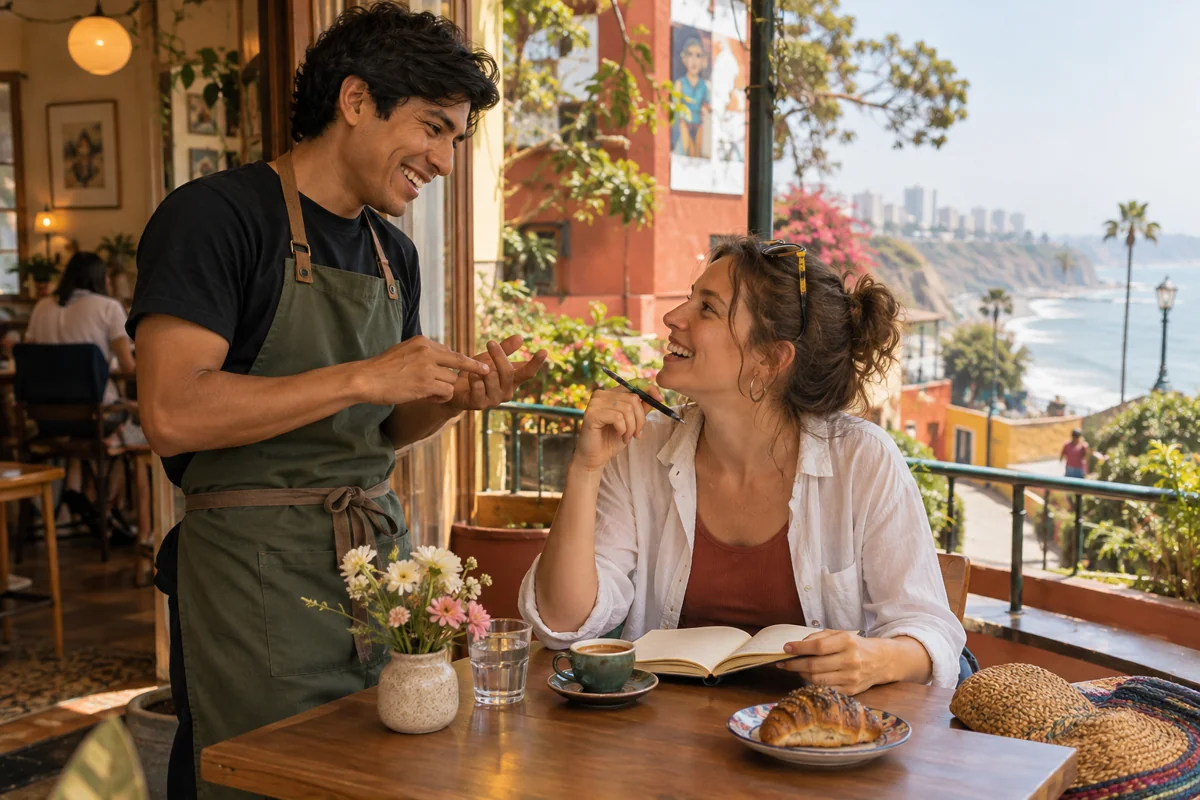
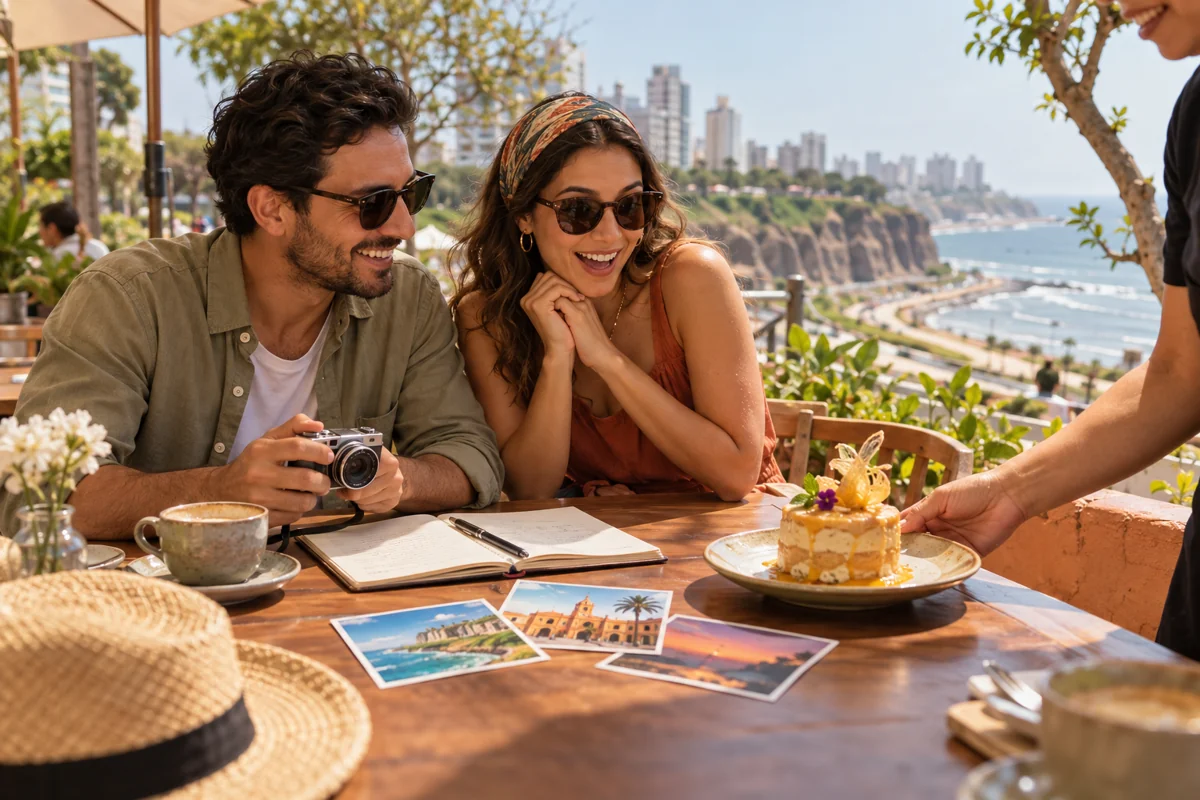
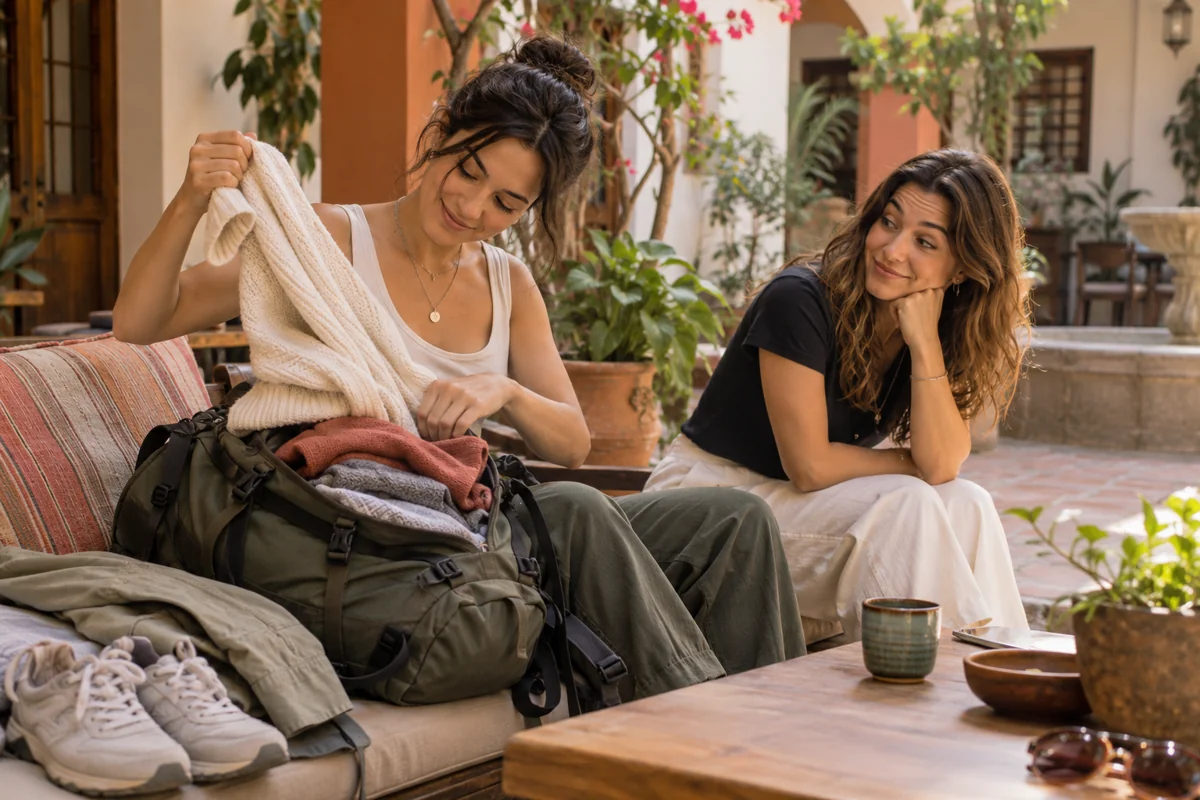
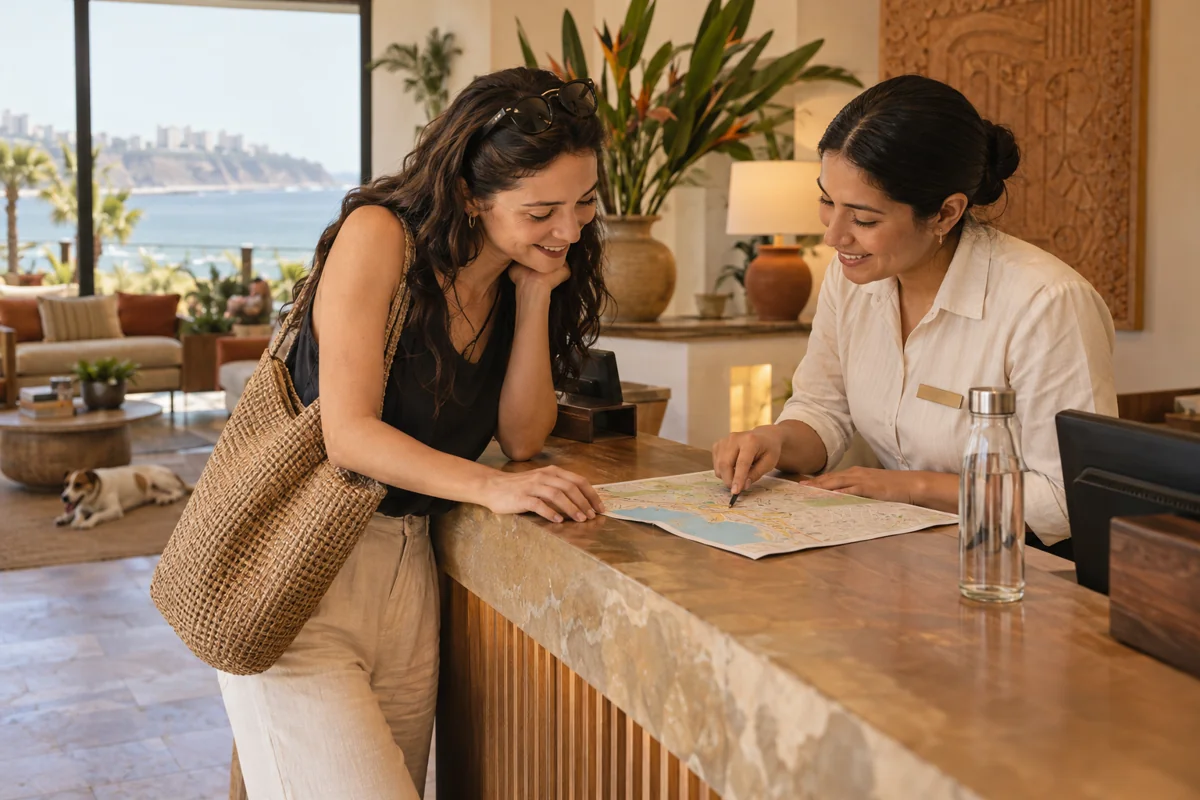
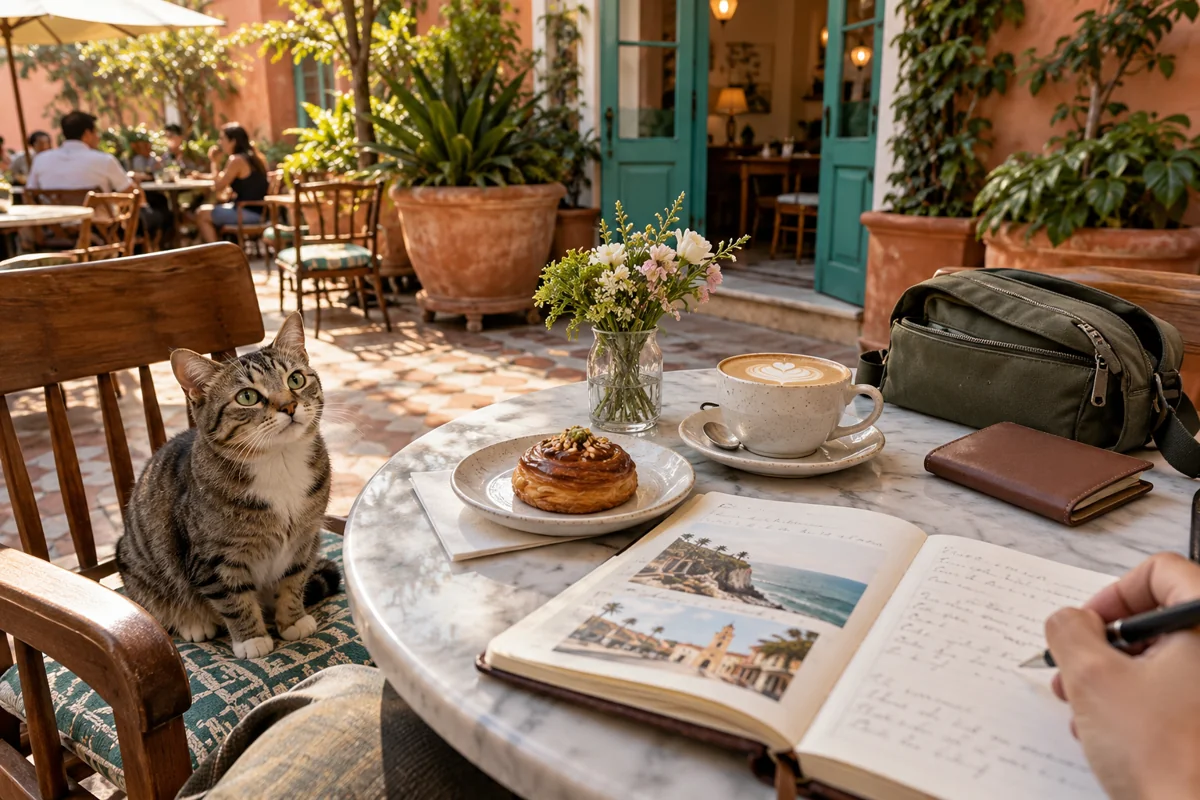
Come for the coast. Stay for the stories, the neighbourhoods and that next wonderful meal. Your thoughtful companion to a first visit, from arrival to the last coffee.
Plan Lima by area, protect your arrival, and leave room to change the day. This guide is for a first visit, especially a stay of two to four days. It offers decisions rather than a checklist of places to collect. The proposed days and visit blocks are editorial suggestions, not measured transfer times or promises about what you can fit into a day.
Lima combines a Pacific coastline, archaeological sites, museums, residential districts, working streets and food traditions from different communities. The metropolitan area cannot be treated as a compact historic town. A hotel address and a restaurant address may both say Lima while requiring a substantial transfer. Compare locations before paying for timed activities. A shorter list near your accommodation can produce a more satisfying visit than an ambitious route across the city.
Choose Lima if you enjoy museums, urban walks, food and architecture. If your priority is reliable beach weather, uninterrupted quiet or easy travel between widely separated attractions, shape your expectations before booking. An ocean view does not automatically mean beach access, warm water or a step-free route. Coastal parks are often above the shore, and a route down may be very different from a route along the top.
Weather without the postcard assumption
The coast can be overcast and damp, with fine mist known as garúa. It is not the same as a tropical downpour. Summer and winter experiences differ, and conditions can change within a day. Pack layers and check the forecast for your dates rather than relying on a general image of South America. A grey sky does not establish a low ultraviolet exposure. Current UV information remains a separate check. Source 7
Earthquake preparation
Read your accommodation's evacuation plan on arrival. Locate the stairs, ask staff about the building's internal safety areas and arrange assistance if stairs are not usable for you. During shaking, protect yourself from falling objects and follow current local emergency instructions. Do not improvise a rush into traffic or an exposed stairwell. On coastal routes, learn the posted tsunami evacuation directions; a hotel's earthquake assembly point is not necessarily a coastal evacuation destination. Official guidance is linked for review, but building-specific arrangements must be confirmed with staff. Source 8
Check the rules for your passport and itinerary, not another visitor's experience. Nationality, travel document, transit route, residency and purpose of travel can change what you need. This edition does not offer a universal visa exemption or a guaranteed length of stay. Consult Migraciones and the relevant Peruvian consulate before paying for travel that cannot be changed. Verify the passport-validity rule for your circumstances with the airline and authority. Source 1
Entry and the digital migration record
Keep your accommodation details, return or onward travel information and booking confirmations available without internet. Make sure the name on the booking matches your travel document. At the border, confirm the stay actually authorised for you. Do not treat a general maximum mentioned online as the duration you personally received. The official TAM Virtual service is intended to show authorised stay and evidence of regular entry; check that you can access it and save your record when available. Verify availability before relying on it. Save your record when available. Source 2
If your plans include work, study, business paperwork or a stay beyond ordinary tourism, ask the authority about the appropriate status. A travel guide cannot decide your immigration category. For children, confirm documents and any consent requirements for your family arrangement and transit countries. If you replace a passport during travel, ask the authorities how the new document connects to your entry record rather than assuming the system updates automatically.
Insurance, medicines and health planning
Choose insurance by the activities and destinations in your whole Peru itinerary. Read medical coverage, exclusions, cancellation terms, assistance procedures and how payment is handled. Save the policy number and claims contact offline. Ask your own clinician or travel-health service about vaccines and personal needs before departure. Lima advice is not a substitute for advice about rainforest travel, altitude or onward destinations. Health recommendations depend on the complete route and your circumstances. Source 6
Carry essential medicines in their labelled packaging with supporting prescriptions where appropriate. Verify entry restrictions and supply arrangements for controlled or temperature-sensitive medicines with the relevant authorities and carrier. Do not wait until arrival to discover that your treatment needs refrigeration or a prescription in a form a local pharmacy cannot accept. Pack enough for foreseeable disruption without exceeding current rules.
A practical packing system
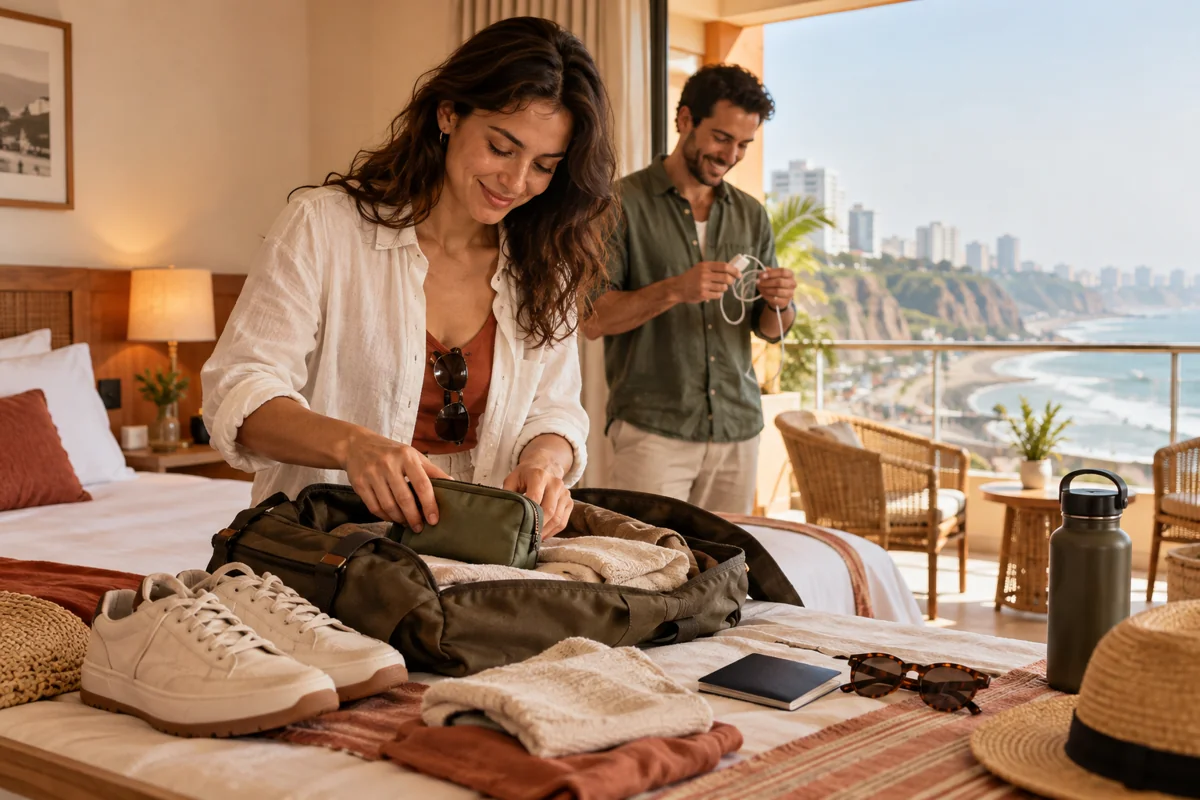
Bring a light layer, a wind-resistant outer layer, comfortable shoes, sun protection and a small bag that closes. Separate a backup card from your daily wallet. Store a passport copy and important contacts securely offline, with access protected by your device lock. Keep originals available when required by the airline, accommodation or authority. A copy is a backup, not a replacement for an original when the law or provider requires one.
Check the electrical input printed on each device and verify the socket and supply at your accommodation. A plug adaptor does not convert voltage. Confirm before connecting equipment such as hair tools or medical devices. This edition intentionally does not certify a universal socket arrangement for Lima buildings.
Connectivity that works at arrival
Before buying an eSIM, check whether the phone is unlocked and supports the plan. Confirm activation date, data allowance, coverage and whether voice calls are included. A data plan may not let you call a local emergency number. For a physical SIM, use an established provider channel and verify identification requirements. Set up your transport account and bank authentication before leaving home. Local wallets may depend on identification or banking arrangements you do not have, so keep another payment method.
Download the city area in a map app, your accommodation pin and the airport transfer instructions. Save screenshots of entrances and meeting points, not only promotional building images. Arrange a check-in message with someone you trust. If travelling without Spanish, save the phrase cards in this guide and the exact address of your accommodation.
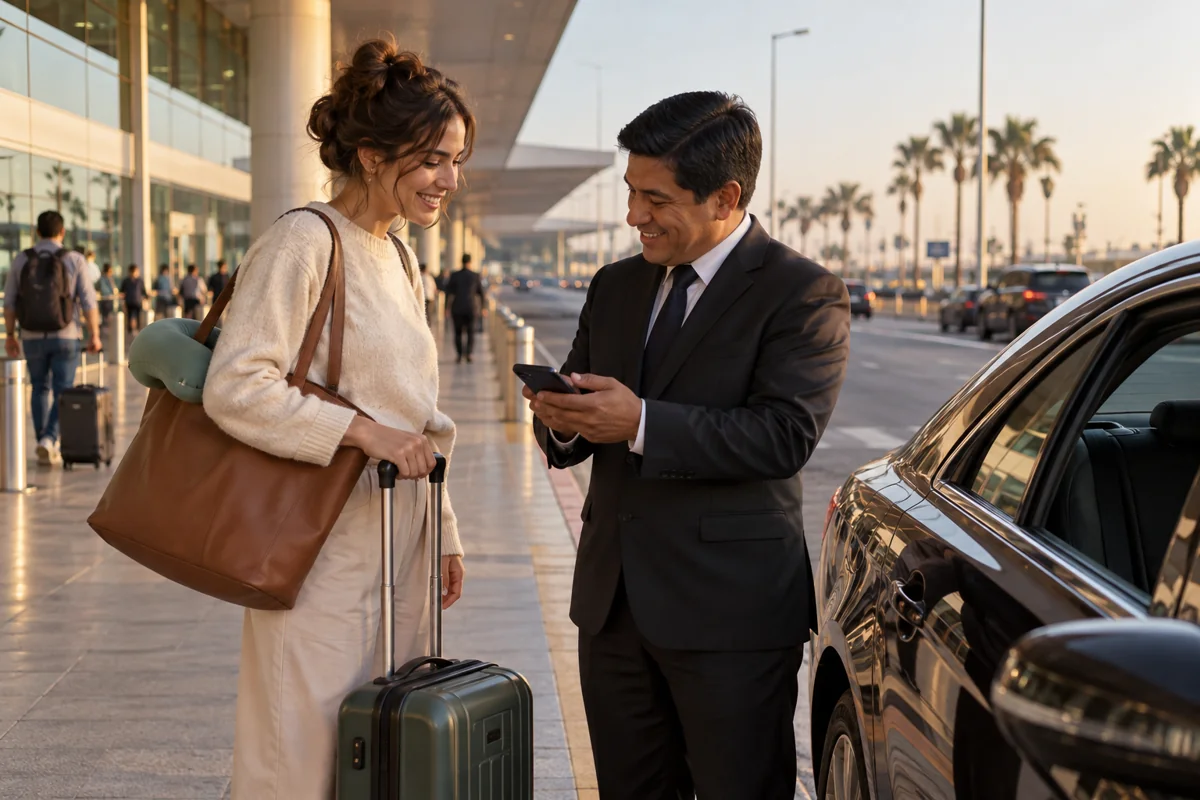
Make your first transfer a confirmed arrangement before you are tired and offline. Use the current terminal and pickup instructions supplied for your flight. Older airport videos and maps may describe a different arrangement. Do not choose an entrance or pickup lane from memory. The airport's own transport information is the starting point for authorised options; verify the operator's meeting details on your travel date. Source 3
Choose the transfer before choosing the fare
The airport describes authorised taxi counters in domestic and international arrivals, with staff directing passengers to the assigned vehicle area. A counter location is not a fare quotation. Obtain the total for your destination, luggage and party, and understand the payment method before accepting. If you booked through your accommodation, confirm the company, contact and process if the flight is late. Do not follow someone simply because they say the hotel name. Source 3
An airport bus can suit a visitor whose stop, baggage and final connection fit the service. Verify the route, operating times, luggage conditions, price and exact place to board. Airport Express connects the terminal with stops in Miraflores; check the current route and the final connection to your address before booking. A cheap first leg can become inconvenient when it needs an unfamiliar late-night connection. Source 4
For an app pickup, confirm that the service can use the current pickup point and that you can communicate without leaving the terminal to search for reception. Match the actual vehicle and driver with your booking before boarding. If there is a mismatch, stay at an appropriate staffed location and resolve it through the booking channel. A similar-looking car is not sufficient confirmation.
Money on the first day
Have a way to pay for a small practical expense even if the first cash machine or card terminal does not work. At an ATM, read the issuer and operator charges displayed before accepting. Decline a transaction if the amount or conversion is unclear. Shield your PIN and put your money away before walking off. Never give a stranger your card to fix a failed transaction.
For currency exchange, compare the displayed buying and selling rates, confirm which applies and count the money before leaving the counter. Ask your accommodation for an established exchange office and independently confirm its identity. No exchange business is endorsed in this edition. Clean, undamaged notes can be easier to use than worn foreign notes, but acceptance depends on the institution; do not rely on a universal rejection rule.
First-hour checklist
Confirm your luggage before leaving the collection area. Save the accommodation address and a backup contact. Check the pickup point through the official or booked channel. Confirm driver, vehicle, destination and total price. Send your arrival update from a place where you can stop safely. Keep passport, phone and payment access with you rather than in an unattended bag. Ask about the return transfer later when you can plan it carefully, not by copying the arrival journey's duration.
Keep the first evening simple. Confirm check-in time, late arrival access and whether someone will be present at reception. If you arrive before a room is ready, establish luggage storage and access to a restroom in advance. Choose a nearby meal and a short orientation walk if energy permits. A prepaid multi-stop tour immediately after an international flight leaves little room for delay.
Choose repeatable habits that reduce exposure without turning the city into a threat. This guide does not classify whole districts as safe or unsafe, and it does not publish crime frequencies without a current data source. The scenarios below are practical precautions, not a claim that each happens to most visitors. Streets, time of day, transport choices and individual circumstances matter more than a broad label.
Phone and belongings
Stop inside a suitable business or away from the traffic edge to study directions. Keep the phone out of a rear pocket or loosely held at an open vehicle window. Separate the items needed for the next payment from your reserve cash. In a crowd, close bags and avoid setting them behind a chair where you cannot see them. An equipment strap is a convenience, not a reason to resist a robbery. If threatened, prioritise your physical safety over recovery of property.
Transport and unplanned approaches
Verify the driver and vehicle against your booking, and share trip information through a channel you control. Confirm the destination before moving. If using a street taxi, agreeing a price does not establish the driver's identity or provide the same booking trail as a recorded service. If a situation feels inconsistent with what you booked, stay in a staffed public setting and make another arrangement. Do not solve uncertainty by entering a vehicle first.
If someone claims to be an official and asks for money, documents or a search in an isolated place, do not turn the guide into a script for confrontation. Seek help from identifiable staff or an official channel. Ask for assistance to establish what is required. Do not hand over banking passwords or accept a demand to visit an ATM as routine administration. This is general precautionary advice, not a description of legitimate inspection powers.
Evening plans
Decide how you will return before going out. Watch your drink being served and keep it in your control. Arrange a meeting point with companions if phones fail. Pay attention to how much you are drinking, especially with unfamiliar cocktails. If a friend becomes unexpectedly unwell, seek assistance and do not leave them alone. Choose a well-defined pickup point where the driver can legally stop. Do not wander through unfamiliar empty streets merely to save a small fare difference.
Districts and the exact route
Miraflores and San Isidro can offer convenient bases, but the district name does not describe every block or the route between two addresses. In Barranco, ask about stairs, slopes, evening access and the specific return from your venue. In the Centro Histórico, plan the actual route, current access and a clear return arrangement rather than extending a walk indefinitely beyond the area you intended to visit. These are planning distinctions, not district-wide safety ratings.
Surco covers varied locations and is not automatically close to the places on your itinerary. In Chorrillos, confirm how a coastal or hill visit connects to your next stop. In Callao, distinguish the airport, a specific cultural visit and a journey elsewhere in the province; do not assume they are one walkable destination. For any district, reassess a route if lighting, closures or the number of people around differ from what you expected. Request current local advice at your accommodation and compare it with an independent official advisory when needed.
Different travellers, specific preparations
For a woman travelling alone, establish a check-in routine, choose transport you can verify and ask how reception handles late arrival. Select a room and access arrangement that you are comfortable using independently. You do not owe a stranger your accommodation details or your full itinerary. The same boundary applies to unsolicited social invitations from anyone.
For families, choose a simple separation plan and teach children how to identify a staff member. Carry a contact card that does not publicly display unnecessary personal information. Ask the transfer operator about an appropriate child restraint in advance; vehicle size alone is not an answer. Schedule food, restrooms and rest before the group becomes exhausted.
For LGBTQ+ travellers, this guide does not promise acceptance at every venue or provide a current legal assessment. Ask trusted current community or travel resources about the specific venue and context. Confirm room arrangements directly if they matter to you. Preserve privacy in public booking messages and use the same practical transport and check-in planning as any visitor.
For a visitor without Spanish, save the address, booking identifier and phrase for asking staff to call official assistance. For a traveller with mobility needs, plan the entire route including curbs, toilets, transfers and evacuation, not just a venue's entrance ramp. Do not accept a generic accessible label without asking what assistance and equipment are actually available.
Getting official help
Police emergency: 105. Fire service: 116. These numbers appear in the official PNP contact listing, consulted through its indexed extract. For a medical emergency, SAMU lists 106; its coverage and response depend on location and circumstances. Have your exact address ready, and ask staff to assist if language or connectivity prevents the call. No response time is promised. Source 5Source 9
Compare door-to-door effort, not just kilometres or the first fare you see. A trip includes finding the pickup point, waiting, boarding, traffic, the last walking segment and finding the correct entrance. Build your day around the actual addresses. Check a live estimate close to departure and leave room for a missed connection. The same route can behave differently on your return.
Choosing a mode
A booked car can help with luggage, a direct destination or a route that is awkward on foot. Its trade-offs are waiting, traffic, price variation and the need to verify the booking. Keep the destination pin precise and confirm whether the entrance is on another street. A pin in the centre of a large property can send a driver to the wrong gate.
The Metropolitano can be useful when its corridor and stations fit your journey. Corredores and other buses may cover routes a car would make expensive, but boarding arrangements, payment and service patterns must be checked. This guide does not publish current fares, station hours or route numbers because they were not verified. Use current ATU information and confirm your final walking connection before boarding. Do not infer that any vehicle with a similar colour follows your intended route.
Walking suits a short, understandable route with crossings, surfaces and daylight that fit your needs. A distance that looks short on the map can involve stairs, a large road or a coastal level change. For cycling, choose a route you have assessed rather than treating a painted segment as a continuous protected connection. Confirm helmet and equipment arrangements with the rental provider. No operator is evaluated here.
A simple comparison table
Booked car: direct travel and luggage, variable traffic and quotation, verify driver and pickup. Airport bus: potentially useful airport connection, fixed stops and onward transfer, verify today's timetable and baggage policy. Urban bus or Metropolitano: useful on a fitting corridor, unfamiliar payment and interchanges, verify ATU service information. Walking: flexible local exploring, surface and crossing demands, verify the exact route. Bicycle: local movement with appropriate infrastructure, route continuity matters, verify equipment and return conditions.
Reservations change the calculation
Never use the shortest predicted drive as the whole gap between a tour and dinner. Ask what happens if you miss the start, whether bags are accepted and whether the meeting point differs from the attraction entrance. When your day contains several prepaid appointments in different areas, remove one or change its time before paying for another. A flexible lunch often helps more than an elaborate transport plan.
Transport decisions, fares and journey times: check before you go
Choose a base for your actual days, then check the exact room and street. A district's reputation cannot answer whether you will sleep well, reach your activities comfortably or manage the entrance with your luggage. Plot the places you genuinely intend to visit before comparing accommodation. For a short stay, reducing repeated transfers can matter more than choosing a property with more facilities you will not use.
Match the base to the visitor
Miraflores is a reasonable area to investigate for coastal walks, everyday services and a first-time visitor who wants a recognisable base. Confirm how the property connects to the particular parks and streets you plan to use. A listing that includes the district name can still be inconvenient for your walking route or place you above a slope you cannot use comfortably.
Barranco can suit someone interested in art, cafés and evening venues. Ask about street noise, nearby events, room position and the route home after dinner. A visitor who wants to see Barranco once does not necessarily need to sleep there. Someone travelling with a child who sleeps early may prefer a quieter room arrangement over proximity to nightlife.
San Isidro can suit a visitor whose appointments or preferred activities are nearby, or who values a different daily rhythm from coastal sightseeing. Confirm food options and transport from the actual address. Surco may fit a specific family, work or local visit, but should be chosen because of those locations, not because the whole district is described as convenient. Centro Histórico accommodation may suit a heritage-focused plan; check evening access, reception and your route to the rest of the trip. None of these descriptions certifies an individual property.
Questions to send before paying
Ask for the total for your dates, including mandatory charges and the treatment of any nonresident tax benefit. Confirm the room category, bed arrangement, window, air circulation and whether the photograph represents the booked room. Ask about construction, nearby bars and which side of the building the room faces. A sea view is not a guarantee of a quiet room or an unrestricted view from every bed.
For limited mobility, ask for doorway measurements if needed, lift access, bathroom configuration, step-free access from the car and the evacuation plan. A lift in the lobby may not serve every room or breakfast area. For families, confirm cot or bed availability and any occupancy conditions. For late arrivals, obtain written access instructions and the contact to use if reception is closed. Ask whether luggage storage is staffed and how collection is recorded.
Booking discipline
Read the cancellation deadline with its local time zone, the payment schedule and the amount you lose if plans change. Keep a copy of the terms as they appeared when you booked. If using a platform, understand whether the platform or property handles the payment and refund. Do not move a payment to an unexpected personal account simply because a message claims to be from the hotel. Verify unusual requests through a channel you already trust.
Choose a few places that fit your interests and build the travel around them. The visit blocks below are flexible editorial planning choices, not official tour durations. Unless a source note states otherwise, prices, opening hours, guided-language availability and current access should be checked before your visit.
Centro Histórico
What it is: a historic urban area of civic, religious and architectural interest. It suits visitors who enjoy streets, façades and the context a guide can explain. Allow a flexible half-day in your own plan rather than stacking several distant reservations around it. Daylight is the editorial preference for a first orientation. Confirm access to specific buildings, events, closures and the guide's meeting point. Accessibility depends on the street and building; ask about surfaces, steps and toilets. Arrange the return before you are tired and avoid adding a second major district simply because the map seems manageable.
Miraflores and the coastal parks
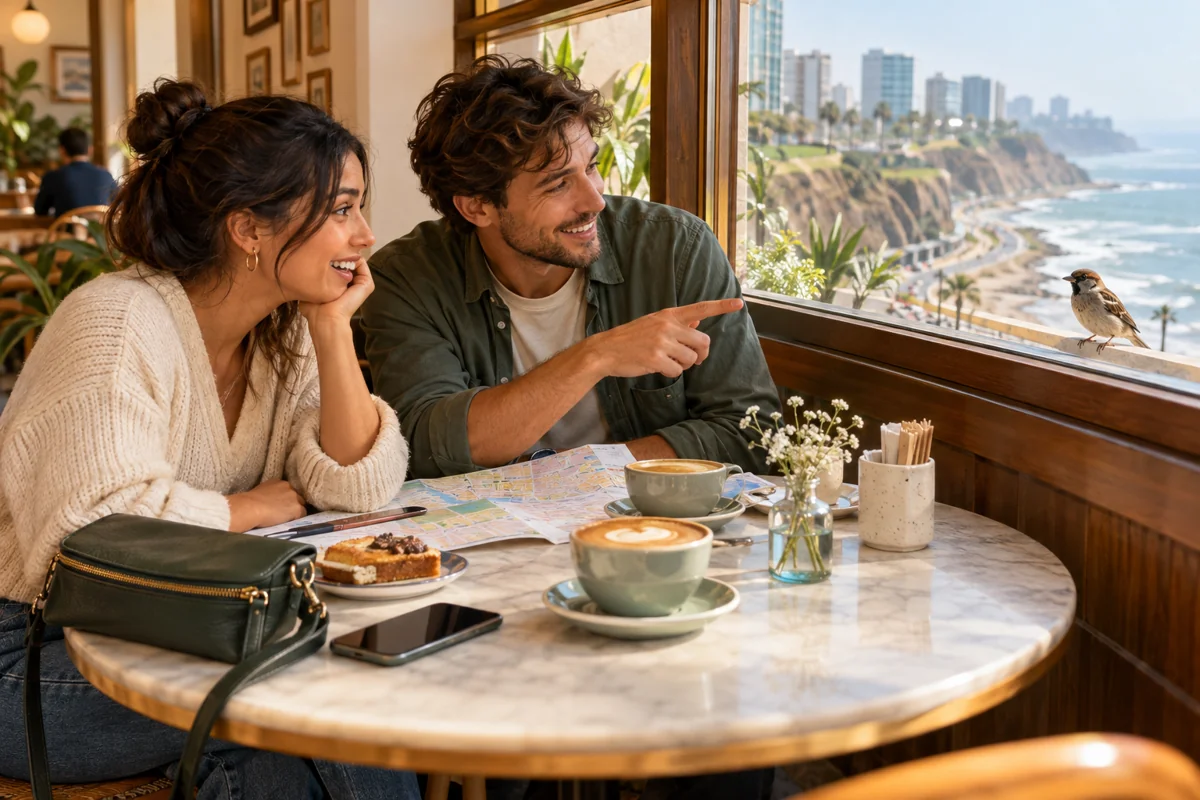
What it is: an urban coastal area with parks, residential streets and viewpoints. It suits a gentle orientation, a family break or a day with fewer ticketed commitments. Choose a short local walk or a flexible half-day, with a café stop and an exit option. Pick your time using the day's forecast and daylight, not a promise of sunset colour. Verify works, paths, crossings and the distinction between the clifftop and beach. Accessibility varies across routes. Remain on designated paths and respect barriers rather than approaching a cliff edge for a photograph.
Barranco
What it is: a district that visitors often explore for architecture, art, cafés and evening venues. It suits a slow walk with a defined route and a planned return. Set aside a flexible half-day if you want to combine a venue and a meal. Confirm gallery openings and book any specific activity rather than expecting every door to be open. Ask about slopes and stairs on your chosen path. If your main aim is dinner, choose the restaurant and transfer first instead of arriving hungry and walking indefinitely in search of the right place.
Museo Larco
What it is: a museum in Pueblo Libre with collections relating to ancient Peru. It suits visitors who want context for archaeological travel elsewhere in the country. An editorial half-day including the transfer and a rest stop is more practical than treating the visit as a quick detour. The museum's own visit page lists tickets, languages, services and access information. Verify the price and your preferred visit arrangement directly before booking. Accessibility information comes from the operator and is not an independent route audit. Source 10
The operator's page contains both a standard schedule and special conditions. A current dated notice for your visit should prevail over a generic search extract. This guide therefore links the page rather than freezing a promotional timetable into an offline document. Ask whether a guided activity, family programme or café booking is separate from general museum admission. Confirm the arrival entrance and whether any room or service is temporarily unavailable. These are questions to resolve, not reasons to avoid the museum.
Huaca Pucllana
What it is: an archaeological site within the urban fabric of Miraflores. It suits someone who wants a local archaeological visit without treating every ancient site as interchangeable. Allocate a flexible visit block plus the guided arrangements the operator requires. Verify opening days, ticketing, tour languages, age conditions and route accessibility directly with the museum. No current hours or prices were confirmed for this edition. Source 11 Do not assume that seeing the perimeter gives the same experience as entering the site, or that restaurant access includes a site visit.
Pachacámac
What it is: an archaeological destination with a site museum, best treated as a separate outing rather than an extra stop after a full city day. It suits a visitor who wants more time with archaeology and can arrange the complete transfer. Reserve a generous day block according to your pace, and confirm which museum and site areas your booking includes. Verify current admission, route, guides, sun exposure and transport back. The museum publishes accessibility resources, but that does not certify that every outdoor part is usable for every visitor. Source 12
Other museums, parks and art
Choose another museum because its collection interests you, not because it fills a gap in a list. Check the institution's current programme, language provision and accessibility before travelling. A temporary exhibition can change the value of a visit; a closed gallery can change it again. A local park can provide a useful rest break without becoming a named attraction to schedule. For public art, photograph the work respectfully and confirm restrictions if entering a private gallery or buying a reproduction. Venue recommendations are not made without evidence in this edition.
Nightlife and day trips
A planned evening can be a meal, a performance or a venue you have checked, rather than an unstructured sequence of stops. Confirm entry conditions, prices and the return arrangement. Do not combine unfamiliar drinks with a need to navigate a new route on foot. For a day trip outside the city, ask for the actual driving plan, toilets, walking demands, weather alternative and cancellation terms. Coastal excursions, archaeological outings and longer regional trips have different demands. This guide does not endorse a particular operator or promise that a long-distance destination is a relaxed day return.
Choose food by ingredients, handling and your own needs, not by a promise that one hour or one district makes it safe. The dish notes below explain common forms rather than certify every recipe. Ingredients vary by cook and restaurant. Say what you cannot eat, ask about preparation and confirm that the person taking the order understands. A familiar dish name does not guarantee a familiar allergen profile.
Seafood and cold dishes
Ceviche usually centres on raw fish with citrus, seasoning and accompaniments. Citrus is not a substitute for safe handling or cooking. A lunchtime meal is not a medical safety guarantee. Ask what fish or seafood is used and choose a business that can explain preparation and storage. Pregnant, immunocompromised or otherwise higher-risk travellers should discuss raw-food choices with their clinician. The food-safety source offers general travel guidance, not an inspection report on Lima restaurants. Source 13
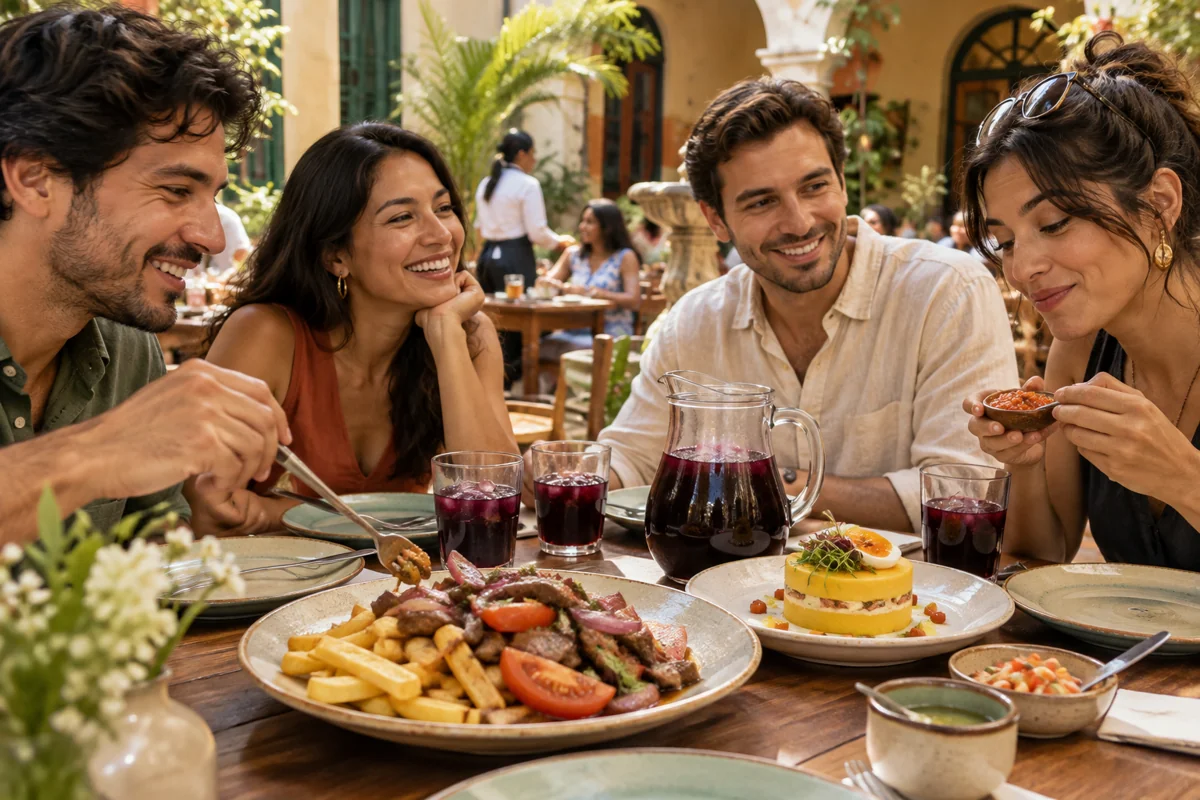
Tiradito often presents thinly sliced raw fish with a seasoned sauce; do not assume the sauce is free of dairy, nuts or gluten. Causa commonly uses seasoned potato in a layered preparation with a filling. Ask whether it contains fish, chicken, egg or mayonnaise. Arroz con mariscos is a seafood rice dish; it is not a suitable fallback for someone avoiding shellfish just because the rice is cooked. Cross-contact questions still matter.
Hot dishes and mixed traditions
Lomo saltado is commonly a stir-fried beef preparation with onion, tomato and accompanying starches. Soy sauce and shared cooking surfaces matter to some dietary restrictions. Ají de gallina is a creamy chicken preparation whose recipe can include bread, dairy and nuts. Ask rather than inferring that chicken makes it a simple allergen-free option. Anticuchos are skewers often associated with beef heart; confirm the meat before ordering if you have a preference or restriction.
Chifa refers to Chinese-Peruvian food traditions, not one standard dish. Nikkei refers to Japanese-Peruvian culinary traditions, not a guarantee that a menu is raw, seafood-based or free of any particular ingredient. Both offer varied cooking styles. Read descriptions and ask about sauces and shared preparation. A vegetarian-looking plate can include meat stock, fish sauce or an animal-based garnish unless you confirm otherwise.
Breakfast, sweets and drinks
For breakfast, look at the components rather than treating a set menu as fixed. Bread, eggs, fruit and hot drinks may be offered in different combinations; confirm what the quoted price includes. If trying a sandwich, ask about fillings and condiments. Desserts can contain dairy, egg, wheat or nuts. Chicha morada is commonly a purple-corn drink, but sweetness, ice and preparation vary. Ask if you need a particular ingredient excluded.
Pisco sour is an alcoholic cocktail whose recipe commonly includes citrus and egg white. Ask about ingredients and choose a nonalcoholic option if that suits you. The apparent sweetness of a drink does not tell you its alcohol content. Coffee and local beer offer different choices by business, but this guide does not rank producers or claim availability. Ask whether a drink contains alcohol instead of relying on its colour or presentation.
How to choose a place
A clear menu, a straightforward answer to an ingredient question and an understandable total can be more useful than a claim that a business is authentic. A busy service can suggest turnover, but a queue is not evidence of hygienic handling. At markets, choose a place where you can understand what is being prepared and how you will pay. Market food and formal restaurant food both require judgement. No type of venue receives a blanket safety certificate here.
For a special meal, verify the reservation date, location, menu, dietary accommodation and cancellation terms. Tell the restaurant about restrictions before paying for a fixed menu. Ask what happens if you arrive late. Do not schedule an expensive timed meal immediately after a distant excursion with an uncertain return. A booked table is not a reason to pressure a driver to hurry.
Dietary communication
For a vegetarian meal: “No como carne ni pescado” means “I do not eat meat or fish,” approximately “noh KOH-moh KAR-neh nee pehs-KAH-doh.” For a vegan meal, add “ni huevos ni lácteos,” “nor eggs or dairy,” approximately “nee WEH-vohs nee LAHK-teh-ohs.” Confirm broths and sauces separately. These phrases communicate preferences; they do not establish a restaurant's ability to prevent cross-contact.
For an allergy: “Tengo alergia a los frutos secos” means “I have a nut allergy,” approximately “TEHN-goh ah-LEHR-hee-ah ah lohs FROO-tohs SEH-kohs.” Name your actual allergen precisely on a professionally prepared translation card. For gluten: “No puedo comer gluten,” “I cannot eat gluten,” approximately “noh PWEH-doh koh-MEHR GLOO-tehn.” Ask about separate equipment if medically necessary. If the answer is uncertain, choose something else rather than relying on reassurance alone.
Compare the complete amount and keep a record of what you agreed. This edition deliberately avoids a universal daily budget or an exchange rate that will expire inside an offline file. Build your own budget from dated quotations for accommodation, airport transfers, local transport, tickets, meals and a reserve. Compare like with like: a room-only price and a breakfast-inclusive price are not the same product.
Paying and keeping control
Ask whether a quote is in soles or another currency before agreeing. At a card terminal, check the amount and currency yourself, keep the card in view where possible and collect proof of payment. If offered conversion to your home currency, compare the displayed terms with your issuer's terms rather than assuming convenience means value. A declined transaction is not proof that the card was not charged; check before repeatedly trying another terminal.
Carry a limited amount for daily needs and retain a backup method separately. Tell your bank how you will obtain assistance from abroad and how replacement authentication works if your phone is lost. Public Wi-Fi is not a reason to enter account details through an unfamiliar link. When sharing a bill, confirm how separate payments will work before ordering, especially for a larger group.
Tips, taxes and quotations
Ask whether a service charge has already been included and whether any extra payment is optional. This guide does not prescribe a universal tipping percentage. Respect a clearly explained bill and query an unfamiliar line before paying. Bargaining may be possible in some informal retail contexts, but it is not an assumption to apply to menus, official tickets or metered services. Agree an amount before a service begins rather than negotiating after using it.
Nonresident accommodation tax treatment is conditional. Ask the property which current rule it is applying, which documents it requires and whether the quoted total already reflects any benefit. Do not subtract a tax yourself or assume a foreign passport alone establishes eligibility. The current tax treatment must be checked directly with SUNAT and the provider. Source 14
Make food, water, sunlight and personal medical needs part of your plan, without turning the guide into a prescription. This is general travel preparation. It does not diagnose illness or decide which vaccines, medicines or treatment you need. Ask a qualified clinician about your health and the whole itinerary, including onward travel beyond Lima.
Water, food and recovery time
Where water safety is uncertain, choose a sealed or appropriately treated supply and confirm the source used for drinks and ice. Wash hands before eating and ask about preparation rather than using appearance as the only test. A sealed bottle is helpful only if its seal and storage are credible. General food and water precautions are supported by CDC travel advice; they are not a guarantee that a specific establishment has been inspected. Source 13
If you become unwell, reduce the day's demands and seek appropriate professional advice. Do not use an online itinerary as a reason to keep travelling while symptoms worsen. Severe or rapidly worsening symptoms require prompt medical assessment. Tell staff or a clinician about your travel history and medicines. Your insurer can help locate suitable care, but do not delay emergency assistance while trying to complete a claims form.
Sun, mist and physical demands
Check SENAMHI's current UV information independently of the temperature or cloud cover. Use shade, clothing and suitable sun protection according to your needs. An overcast walk can still be exposed, and archaeological sites may provide less shelter than an indoor museum. Carry water appropriate to your route and plan a place to rest. Do not infer that a coastal city has the same altitude demands as an onward Andean destination. Source 7
Current dengue notices and other outbreak advice were not comprehensively verified for this edition. Consult current health notices for your destinations and dates, and ask your clinician about appropriate bite prevention. Do not interpret the absence of an alert in this document as evidence that no alert exists. The guide does not list English-speaking clinics without confirming their current service arrangements. Ask your insurer and accommodation to help verify language availability, location and payment terms.
Practical medical access
Find out whether a pharmacy can provide what you need lawfully and in the correct formulation; do not replace a prescribed medicine based only on similar packaging. Keep the original prescription and generic name available. For urgent medical assistance, SAMU's published emergency number is 106; response arrangements must be assessed by the service. Tell the dispatcher where you are, what happened and how to reach you. Source 9
Ask clearly, respect the answer and avoid treating one encounter as a rule about everyone. A simple greeting helps before asking a question or taking a photograph. In shops and accommodation, explain what you need rather than assuming staff have the same vocabulary or expectations. If you do not understand, ask for the amount or address in writing. A slower conversation can prevent a much longer problem.
Everyday encounters
Say hello before beginning a request. Keep your voice measured when a booking problem arises and distinguish the staff member helping you from the decision that created the problem. Be ready to show a reservation or message, but hide unrelated personal information. Do not photograph employees, children or other customers to document an ordinary disagreement. Record the transaction details and use the relevant complaint process instead.
For photographs of people, ask first and respect a refusal without bargaining. If a payment is proposed, establish the terms before taking a photograph. In religious buildings, museums and archaeological sites, follow signs and staff instructions about clothing, access and photography. A place being open to visitors does not make every ceremony, artwork or private conversation available for filming. Confirm restrictions on flash, tripods and commercial use separately.
Say it in Spanish
“Buenos días” means “Good morning,” approximately “BWEH-nohs DEE-ahs.” “Por favor” means “Please,” approximately “por fah-VOR.” “Gracias” means “Thank you,” approximately “GRAH-see-ahs.” Pronunciation here is approximate, designed to help an English speaker be understood rather than replace listening to local speech.
“¿Habla inglés?” means “Do you speak English?”, approximately “AH-blah een-GLEHS?” “¿Puede escribirlo?” means “Can you write it down?”, approximately “PWEH-deh ehs-kree-BEER-loh?” “¿Cuánto es el total?” means “What is the total?”, approximately “KWAN-toh ehs ehl toh-TAHL?” Use the total question before agreeing, not only after the bill arrives.
“Sin escaleras, por favor” means “Without stairs, please,” approximately “seen ehs-kah-LEH-rahs por fah-VOR.” “Necesito ayuda” means “I need help,” approximately “neh-seh-SEE-toh ah-YOO-dah.” “Llame a la policía, por favor” means “Please call the police,” approximately “YAH-meh ah lah poh-lee-SEE-ah por fah-VOR.” For emergencies, combine the request with a written address or a recognisable location. A clear location is more useful than a long explanation of the whole trip.
Time and commitments
Confirm appointment times and the local time zone in written messages. A general cultural observation about punctuality should never become an excuse to miss a booking or expect a service to wait. Ask what happens if your flight or transfer is delayed. For organised visits, arrive according to the operator's instructions, including time for finding the meeting point. Treat staff time with the same respect you want for your own.
Say it in Spanish, approximate English-speaker pronunciation
Use these routes as adjustable planning templates, not promises of a fixed number of sights. The proposed days are editorial choices. Every transfer time needs a current check against your address, departure time, mobility needs and current conditions. One anchor activity with optional nearby additions is easier to adapt than a day of fixed reservations. Keep a meal or rest break flexible whenever another booking depends on it.
One day: stay local and choose a theme
If arriving tired or staying near Miraflores, choose a local orientation, a manageable coastal park walk and a meal. Consider Huaca Pucllana only if its current admission arrangements fit your day. The route logic is accommodation, nearby orientation, optional booked visit, meal, rest and return. This is a sequence diagram, not a street map. No distances or transfer times are implied.
If your main interest is historic architecture, replace that whole plan with a Centro Histórico visit and its transfer rather than adding it on top. Arrange a guide if that suits your interests, verify the meeting point and leave the return open enough for traffic. A one-day visit cannot represent every part of Lima. Choose what you will enjoy now and save another area for a different trip.
For garúa or fatigue, shorten the outdoor portion and choose an indoor visit or nearby café. For limited mobility, confirm a usable entrance, toilet and return pickup before committing to the anchor activity. If an essential lift is not working, choose another activity instead of improvising an unsuitable route.
Two days: separate the urban experiences
Use the first day for a Miraflores-based orientation and, if practical, a separate Barranco visit. Do not label the connection walkable until you have checked the exact route for your group. Choose an early dinner or a defined return pickup if evening navigation is unfamiliar. The sequence is local walk, rest, transfer if needed, chosen Barranco venue and return.
Use the second day for the Centro Histórico or Museo Larco according to your interests. Choosing one as the anchor is a deliberate restraint. Combine both only after checking transfers, opening arrangements and your energy, with no expectation that the same plan works for every visitor. Keep a timed special meal away from the uncertain end of a long transfer. The alternative for a tired traveller is one indoor visit followed by an unbooked meal near accommodation.
Three days: add depth rather than more crossings
Keep the two-day structure and use the third day for a separate archaeological outing such as Pachacámac, or a focused museum and food day. Decide before booking which is more important. A larger archaeological route brings exposure, walking demands and a return transfer that should be arranged as part of the outing. Confirm the guide, transport and admission scope together.
For a museum and food day, build around a collection you actually want to see and one meal whose location makes sense. Allow time to browse or rest without treating it as wasted itinerary capacity. If dietary accommodation is important, book the suitable meal first and make the surrounding activities flexible. Families can alternate the anchor with a park or indoor break rather than collecting additional tickets.
Four days and a sensible departure
Use the fourth day for a missed interest, a flexible local experience or recovery from a delayed arrival. It need not become an additional long excursion. On your departure day, plan the airport journey for that actual day and time, following airline instructions and current airport access information. Do not reuse the journey time recorded on arrival. Keep baggage collection and checkout arrangements explicit.
Route logic to save
Local day: accommodation, local walk, optional site, meal, return. Heritage day: accommodation, planned transfer, chosen heritage visit, rest, return. Archaeology day: accommodation, confirmed transport, museum or site route, rest, confirmed return. Each is a schematic sequence, not to scale and not a navigation map. Use a current real map for addresses and route conditions before leaving.
Prevent the decision that creates the problem, rather than trying to fix it after paying. These reminders are not ranked by frequency or severity. They are prompts for checking your own plan. The aim is to make a few small decisions earlier, while you still have options.
Before choosing a district by reputation
Put your actual activities on a map and compare the exact accommodation address. A famous district does not remove transfers or guarantee a quiet room. Ask about the street and room position, not just the neighbourhood name.
Before accepting a ride
Match the actual driver and vehicle to the booking, confirm the destination and understand the total. Do this before boarding. If the details differ, resolve the mismatch from an appropriate staffed location rather than accepting a verbal replacement explanation.
Before reusing your arrival time
Check the return route for its actual departure day and time. Add the airline's current arrival-at-airport instruction, baggage arrangements and the possibility of a delay. Your memory of a quick drive is not a departure plan.
Before grouping distant zones
Check door-to-door travel between every fixed appointment. Moving three attractions into one day on paper does not move them closer together. Remove or reschedule an activity if one delay would collapse the rest of the day.
Before paying for a hotel
Confirm total charges, cancellation deadline, room type and late arrival access in writing. Ask whether a quoted tax benefit applies to you. A lower first price is not a saving if it omits what you need.
Before ordering with a restriction
Name the ingredient and ask about sauces, stock and shared equipment. A translation app can help communicate, but it cannot establish the kitchen's ability to accommodate an allergy. Choose another meal if the answer remains unclear.
Before walking toward the coast
Check the level change, crossings and actual path. A viewpoint on a cliff does not mean the beach is immediately below you by a route you can use. Allow a rest or choose a different destination if the descent changes the outing.
Before spending foreign notes
Ask whether the provider accepts the currency and what rate or change arrangement applies. Confirm the amount rather than treating foreign cash as automatically interchangeable with local payment.
Before relying on one phone
Save contacts and booking details offline, retain a backup payment method and understand how to access essential accounts if the device is lost. A cloud backup that requires the missing phone to authenticate is not a complete recovery plan.
Before booking a day trip
Ask for the full return plan, walking demands and cancellation conditions. A destination name does not describe the practical effort of the outing. Choose the trip that fits your available day rather than the longest list of stops.
Before trusting a panoramic room image
Ask whether the photograph represents your booked category and whether the view is from the room itself. A rooftop photograph does not certify a bedroom view. Confirm any feature you are paying extra to obtain.
Before continuing when exhausted
Replace one activity with rest, food or a straightforward return. Fatigue can turn small uncertainties about directions, payment and meeting points into larger problems. An itinerary should support your trip, not become a test you must finish.
Make yourself secure, preserve access to essentials and record the facts before pursuing a remedy. The correct next step depends on the event. An emergency, a lost document and a consumer complaint are different situations. Do not wait for a complaint channel when urgent assistance is needed.
Theft or a missing passport
Move to an appropriate staffed place and seek police or medical assistance if needed. Freeze affected cards through the bank's official channel and use the device provider's recovery tools where appropriate. Do not follow an unknown recovery link sent after a theft. Contact your embassy or consulate through its official government directory for replacement-document instructions. No embassy phone is reproduced because nationality-specific contacts were not verified in this edition.
Ask the relevant authorities whether a report or migration update is needed for your case. Keep copies of any report, replacement-document reference and airline instructions. A passport copy helps explain identity but does not itself authorise travel. Confirm onward airline acceptance and entry conditions after obtaining a replacement. Avoid paying an intermediary who promises an instant exception without official documentation.
A blocked card or cancelled flight
Use your backup payment method and contact the issuer using a number already saved or found through its official app. Avoid exposing the full card number or verification codes in a public conversation. For a flight disruption, confirm the booking status directly with the airline, ask what options apply to your ticket and keep receipts. Coverage, compensation and refund rights depend on the actual service and applicable rules; this guide does not promise an automatic payment.
A service dispute
Start with a clear written account: what you bought, when, the terms, what happened and the remedy you request. Retain receipts, reservation messages and relevant photographs without collecting unrelated personal information. Request the provider's Libro de Reclamaciones. Indecopi's official guidance describes approaching the provider and retaining supporting documents; further escalation should follow the current official process. Filing a complaint does not guarantee a particular outcome. Source 15
“Quiero registrar un reclamo” means “I want to record a complaint,” approximately “KYEH-roh reh-hees-TRAR oon reh-KLAH-moh.” “He perdido mi pasaporte” means “I have lost my passport,” approximately “eh pehr-DEE-doh mee pah-sah-POR-teh.” “Necesito un médico” means “I need a doctor,” approximately “neh-seh-SEE-toh oon MEH-dee-koh.” Keep a written location ready for anyone helping you call.
Save this page, add your own details and keep it available without mobile data. Emergency numbers are drawn from official listings consulted on 16 October 2026; confirm calling capability on your device. Police 105. Fire service 116. Medical emergency SAMU 106. Give your exact location and ask staff to assist if you cannot communicate. Response availability is not guaranteed. Source 5Source 9
My accommodation: ____________________. Address and entrance: ____________________. Backup contact: ____________________. Insurer and policy: ____________________. Bank assistance: ____________________. Embassy official contact saved: ____________________.
Ride: verify driver, vehicle, destination and total before boarding. Payment: confirm currency and compulsory charges; keep a receipt. Arrival: save pickup instructions and accommodation access. Departure: check the route for that day and follow airline instructions. Documents: protect originals and keep secure copies. Food: explain restrictions and ask about preparation.
“Necesito ayuda” = “I need help” = “neh-seh-SEE-toh ah-YOO-dah.” “¿Cuánto es el total?” = “What is the total?” = “KWAN-toh ehs ehl toh-TAHL?” “¿Puede escribirlo?” = “Can you write it down?” = “PWEH-deh ehs-kree-BEER-loh?”
If belongings disappear: move to a staffed place, seek official assistance, freeze cards and contact the embassy if a passport is missing. For shaking: follow the building's current safety plan and local guidance. Keep emergency instructions and the accommodation address separate from this guide if another person may need them.
Use these official and operator pages to check the details for your own trip. Opening arrangements, fares, entry requirements and available services can change. Confirm the conditions that matter before making a booking.
Designed for a first visit, especially two to four days. Itineraries are flexible suggestions. Save this HTML for offline reading; external sources, bookings and WhatsApp need an internet connection.
Your Lima stay, with local insight
Find the right stay. Enjoy the rest.
Tell us your dates, budget and what matters most. We’ll help you compare places to stay in Lima and check the details before you book.
Share your dates and priorities. Approximate dates are fine to start.
02
Compare a small shortlist.
See why each option fits, what to consider and which details still need checking.
03
Choose with clarity.
Review availability, total cost, payment details and cancellation terms before committing.
Your trip. Your choice. A local perspective along the way.
Is your advice really free?
Yes. There is no charge for Chasqui’s travel advice. Accommodation, transport and activities are paid separately. We may receive a commission from travel providers when you book through us.
How do you choose what to recommend?
We start with your dates, budget and priorities: location, room comfort, arrival time and the experience you want. Ask us what we have checked in person, what comes from the property and what still needs confirming.
What happens before I book?
Once you choose an option, we check availability with the provider and share the total price, what is included, who receives payment and the cancellation terms. An enquiry is not a confirmed reservation.