ChasquiES

PERU / THE ALTIPLANO / YOUR NEXT CHAPTER

PunoLet the lake
set the pace.

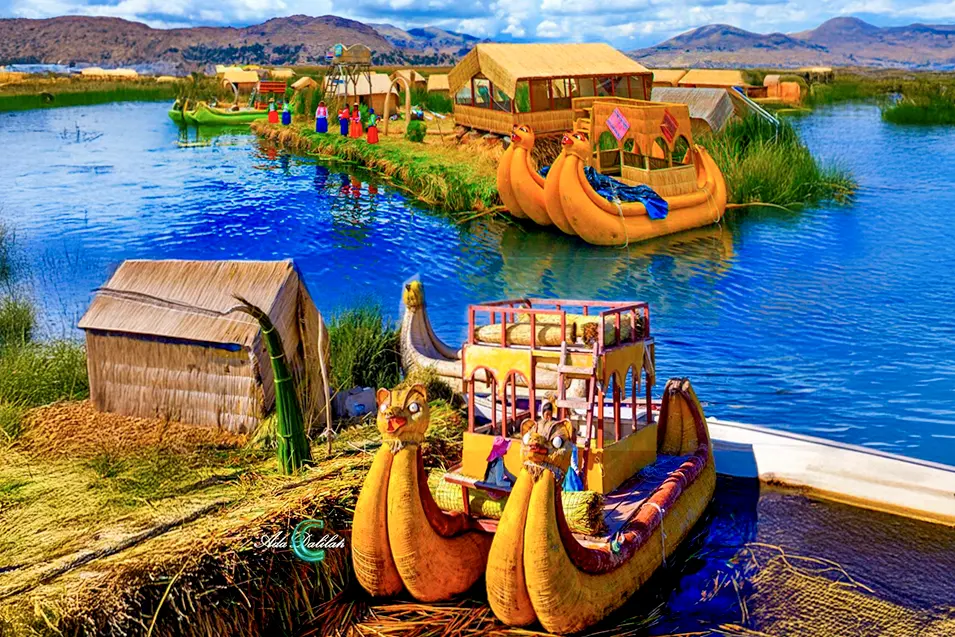
Floating reed islands and boats on Lake Titicaca
The Uros · a world built from reeds.

A horizon that feels like an ocean. Islands made by hand. Stories that begin before the Incas. Come for Lake Titicaca; leave with a different idea of what makes a place unforgettable.

A little more about Puno

Puno is the lakeside city, the departure point and part of the story. Beyond it, the Peruvian shores of Titicaca hold distinct island and peninsula communities. Uros, Taquile and Amantaní are different experiences, not three names for the same boat trip. Give them time—and let your first day be a gentle one.

BEFORE THE BEAUTIFUL PART

Leave space for the altitude.

Puno and the lake sit around 3,800 metres above sea level. Plan a gradual ascent where possible; keep early activity light. A quiet first day is a sensible start, not a guarantee against altitude illness.

Read the short preparation note

Discuss your route with a travel-health clinician before travelling, especially if arriving directly from low altitude. CDC advises avoiding alcohol and strenuous exercise during the first 48 hours at altitude. If symptoms develop, do not ascend further; worsening symptoms require medical help. Severe breathlessness at rest, confusion or difficulty walking require urgent help and descent when safe. CDC altitude guidance ↗

THE LAKE, THE CITY & THE SURROUNDING HIGHLANDS

Places that become
part of your story.

A Chasqui editorial selection.
Choose what speaks to you.
This is not a measured popularity ranking.

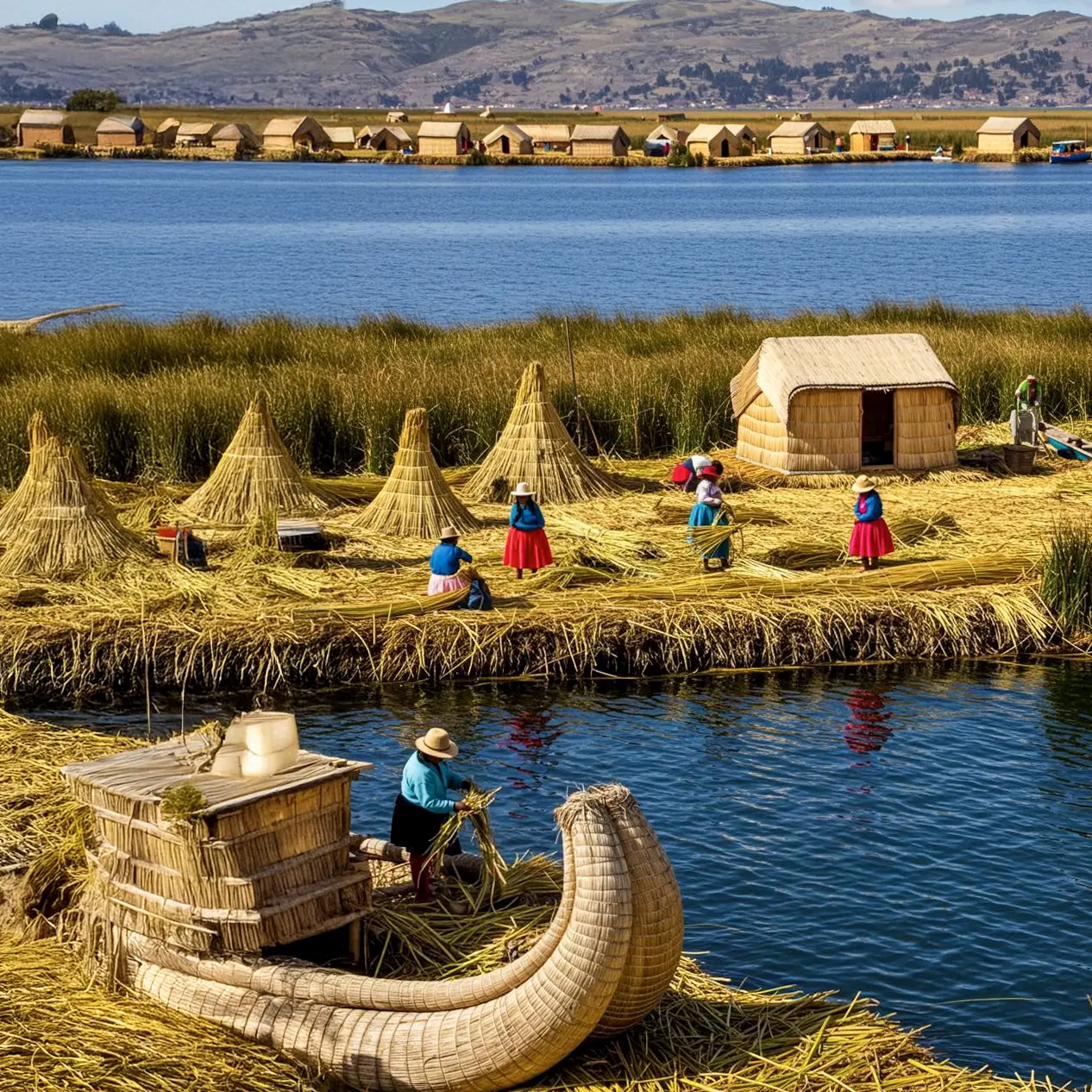
A view of life and totora construction on the Uros islands01

UROS / REED ISLANDS & LIVING KNOWLEDGE

The ground beneath
your feet has a maker.

Step onto a floating island and the first surprise is underfoot. Totora is landscape, building material and daily work. Let your hosts explain how an island is maintained; that conversation gives the photograph its meaning.

Make the visit count

Ask which community you will visit, how long you will stay and who will guide you. A short demonstration, a longer host-led visit and an overnight stay are different products. Confirm whether an optional reed-boat ride costs extra. Ask before photographing people. Uros community tourism ↗

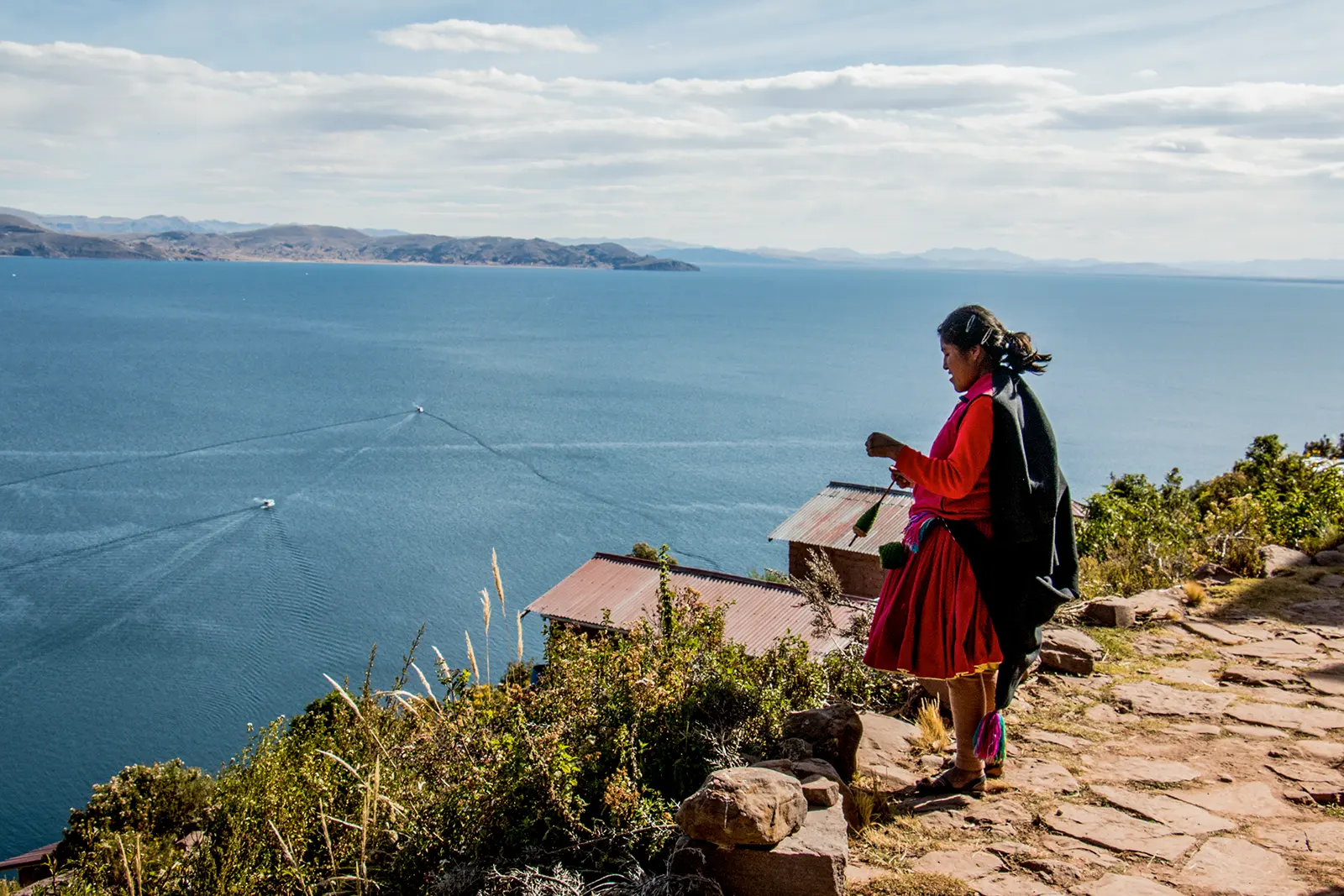
A woman working with thread above Lake Titicaca on Taquile02
Daniel Mendez Moran · CC BY-SA 4.0

TAQUILE / TEXTILES, PATHS & OPEN WATER

A story you can
read in a thread.

Here, textile art is part of everyday life. Men and women make the garments the community wears, carrying knowledge through hands and patterns. The lake opens out around the paths; allow time for both the view and the people.

Make the visit count

Taquile’s textile art entered UNESCO’s Representative List in 2008, following its 2005 proclamation. Ask a maker about a piece before buying. Confirm the landing point, gradients, steps and walking time: routes vary, and a boat ticket does not make the island step-free. UNESCO on Taquile ↗

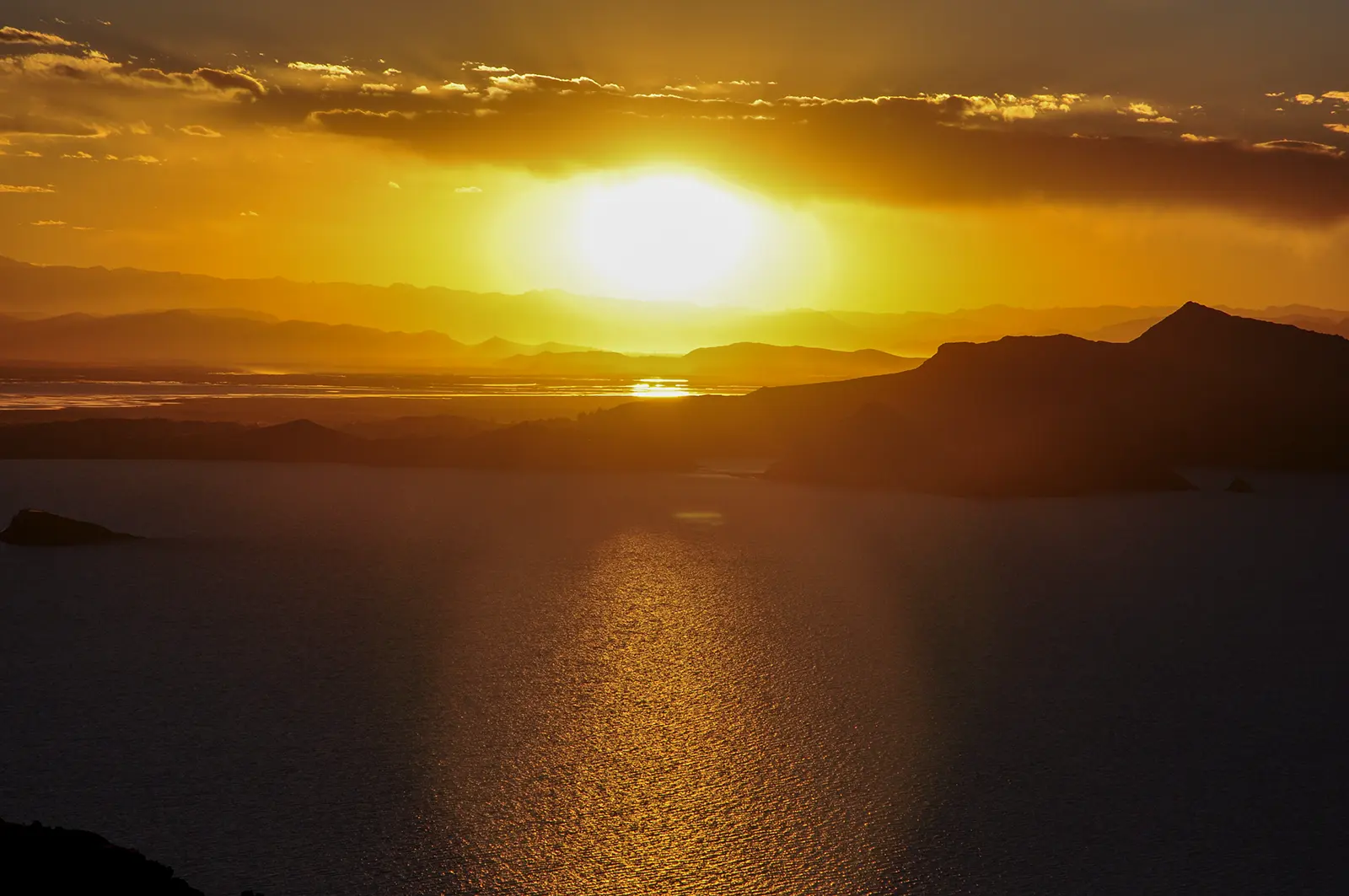
Golden sunset seen from Amantaní over Lake Titicaca+
Sunset from Amantaní · Richard · CC BY 2.0

AMANTANÍ / AN ISLAND AFTER THE DAY TRIPS

Give the evening
a place in your trip.

Stay with a host family and the experience can extend beyond a boat’s departure time. A shared meal, a hillside path, the changing lake light: the appeal is the time between the big moments.

Make the visit count

Agree on the host, meals, bedding, bathroom, hot water, power and meeting point before booking. Higher viewpoints mean uphill walking; choosing to rest is equally valid. Ceremonies and dances are not automatic inclusions. Official island inventory ↗

03 / LAKE TITICACA · THE CROSSING IS PART OF THE VISIT

Leave a little room
for the horizon.

On Titicaca, the distance between two places can be the part you remember. Reeds give way to open water; the shoreline becomes a quiet line beneath an enormous sky. Put the phone away for a few minutes. The lake is very good at filling the screen without it.

Choose the boat experience, not just the destination. A shared island excursion, a private crossing and a guided kayak outing offer different rhythms. Ask about the vessel, passenger numbers, guide language and time actually spent on shore.

For a sunset outing, agree the return route and timing with an experienced operator. Weather and safe navigation come before the photograph. Kayaking needs suitable equipment, a guide and conditions matched to your ability.

Sillustani funerary tower and the landscape around Lake Umayo
Diego Delso, delso.photo · CC BY-SA 4.0 · Lake Umayo

04 / SILLUSTANI & LAKE UMAYO

Some stories
stand in stone.

Funerary towers rise above a wide, quiet landscape. Sillustani’s chullpas connect the history of Colla and Inca societies with the enduring importance of the dead. The water below is Lake Umayo—not Titicaca.

Give this a separate half-day window rather than squeezing it between two departures. A transfer-day visit works only if your flight, luggage arrangements and road time allow.

Explore its history ↗

05 / TINAJANI · A DIFFERENT CHAPTER OF THE ALTIPLANO

Beyond the blue,
a world of red stone.

Leave the lake behind for sculpted rock, wide skies and a landscape that invites you to slow down and look again. Near Ayaviri, Tinajani offers a striking change of colour and scale—especially if geology and photography are your kind of travel.

This needs its own outing. INGEMMET places the canyon about 160 km from Puno. Arrange the round trip, walking route, local access, lunch and weather plan before leaving. The terrain is around 4,000 metres high; fit it into a sensible altitude itinerary.

The canyon visit and services at a named lodge are separate arrangements. Confirm exactly which access and activities your quote includes.

Geological guide to Tinajani ↗
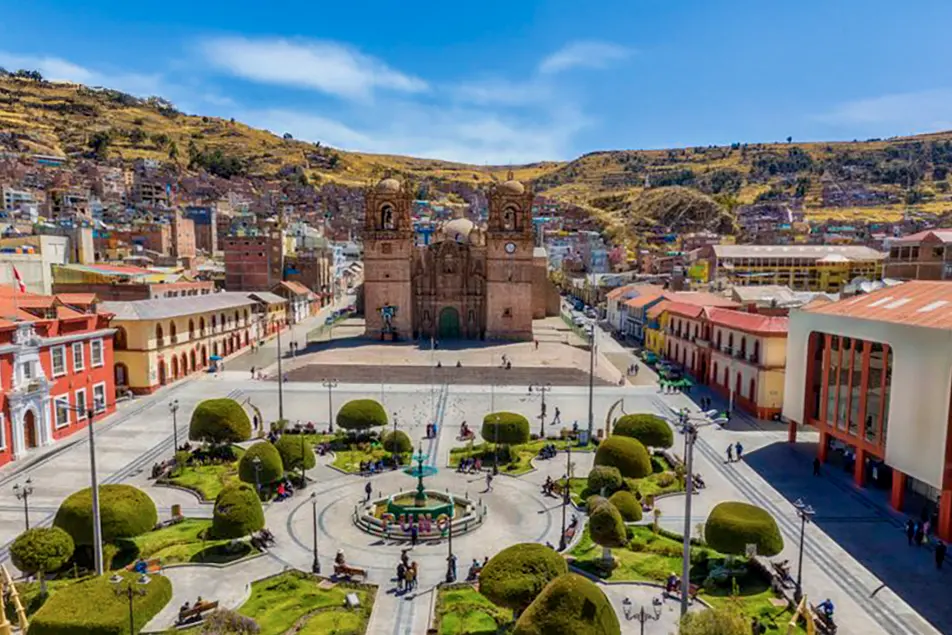
Puno Plaza de Armas and cathedral
Puno’s Plaza de Armas · from the supplied collection.

06–07 / PLAZA DE ARMAS & CATHEDRAL

Don’t let the city
become just your hotel.

The cathedral’s carved façade faces the square, where a slower walk is a good way to get your bearings. Look closely at the stonework, then find a warm drink nearby. Your first afternoon does not need a summit.

The cathedral is an active place of worship: check visitor access and respect services. Official cathedral inventory ↗

Look closer at the cathedral

Its eighteenth-century façade brings European Baroque forms into conversation with local carving traditions. Stand back for the scale, then move closer to the details around the doorway. Interior access may change around services; ask before photographing worshippers.

+

MUSEO CARLOS DREYER

Put the landscape in context.

Archaeology and colonial art make a thoughtful companion to a lake visit. This central museum gives the region’s material history room to speak.

Visitor details

Jr. Conde de Lemos 289, corner of Jr. Deustua. The museum currently lists Mon–Fri 09:00–18:00, Sat 09:00–16:00, closed Sundays and public holidays; international adult admission S/15. Checked 25 October 2026; reconfirm before visiting. Museum website ↗

+

LLACHÓN / CAPACHICA PENINSULA

A shore worth staying on.

Family-run rural stays, local meals and open lake views offer another way into Titicaca. Ask about a host-led walk or a guided paddle suited to the weather and your experience.

Plan the exact road or boat connection in advance. Activities depend on the host and conditions. Community tourism guide ↗

+

LUQUINA CHICO / CHUCUITO PENINSULA

The lake, through your hosts’ eyes.

This Aymara community welcomes visitors into life on the lakeshore. Choose it for conversation, a rural stay and time with a host—not as an extra name on a crowded island circuit.

Confirm the actual home, facilities, meals and transfers before committing. Discover Luquina Chico ↗

+

TITICACA NATIONAL RESERVE

Look closer than the horizon.

Reedbeds shelter a living wetland, including the Titicaca grebe. A locally guided birdwatching outing can reveal what a fast crossing misses. Bring binoculars and let wildlife keep its distance.

Ask which authorised route is operating; sightings are never guaranteed. Wear a life jacket on the water. SERNANP reserve guide ↗

+

VIRGEN DE LA CANDELARIA / FEBRUARY

A city keeping time together.

Music, dance, devotion and extraordinary craft fill Puno’s great February celebration. Recognised by UNESCO in 2014, it brings together Catholic traditions and Andean cultural expressions.

Plan around the published programme for your year. Arrange accommodation early, ask about street access and noise, and leave room for the crowds. This is a living religious celebration. UNESCO on Candelaria ↗

THE QUESTION THAT CHANGES YOUR TRIP

Which island
feels like you?

The Uros are floating reed islands.
Taquile and Amantaní are natural islands.
Each deserves its own introduction.

A practical way to choose
ChooseCome forAllow forAsk before booking
UrosTotora craft, island-building and a host-led introductionA shorter lake outing; longer visits by arrangementWhich island? How much time with hosts? Reed-boat supplement?
TaquileTextile knowledge and wide lake viewsA full excursion day from Puno; uphill pathsLanding point, walking route, time on the island and lunch
AmantaníA host-family stay and a slower eveningUsually a two-day trip with an overnightNamed host, bathroom, warm bedding, meals and return boat
Llachón / LuquinaCommunity stays on the mainland peninsulasA dedicated visit or overnight, not an automatic island-tour add-onRoad versus boat access, room facilities and host-led activities

These are planning suggestions, not fixed timetables. Your arrival, weather, mobility and chosen operator determine what fits.

A LITTLE LESS CHECKLIST. A LITTLE MORE LAKE.

Make the days
belong together.

Build around time on the ground.
Travel days and acclimatisation
need their own space.

01

A glimpse of the lake

ONE AVAILABLE EXCURSION DAY

  1. Choose a shorter Uros visit if you want more margin.
  2. Or choose a full Taquile day with a suitable walking route.
  3. Keep the evening simple and protect your next departure.

For travellers already adjusting well to altitude. Not a plan for landing from sea level and rushing straight to an island.

03

A more generous chapter

THREE DAYS IN THE AREA

  1. Arrive gently: the square, a warm meal and a comfortable room.
  2. Spend a full day on your chosen lake experience.
  3. Give Sillustani its own window—or trade it for a peninsula stay.

An editorial starting point. Add time if your ascent plan, interests or connections need it.

THE USEFUL DETAILS, ALL IN ONE PLACE

Puno travel essentials.
More anticipation. Fewer surprises.

01

Best things to do

Choose one lake experience with time for people, one chapter of regional history and one unhurried meal. That might mean Uros, Sillustani and a bowl of chairo—or a longer stay with an island family.

Ask how much of a tour is spent travelling versus on shore. Two thoughtful stops can be more rewarding than four hurried arrivals. Save the experiences above to start your own plan.

Choose your experiences ↗
02

Best time to visit

May–October: generally the drier period, with bright days and cold nights. November–April: more rain; allow flexibility for lake and road conditions.

February: choose it for Candelaria if the celebration is central to your trip. Check the annual programme before booking. Weather seasons are tendencies, not a daily forecast.

Puno municipality’s climate guide ↗
03

Things to know

Pack layers, a warm jacket, sun protection, rain protection and shoes that grip uneven paths. Carry drinking water from a safe source. On a boat, wear the life jacket provided and ask about boarding assistance if needed.

Ask before portraits, home visits or entering sacred spaces. Agree any activity or photography fee first. A homestay is someone’s home; clear expectations make the welcome more comfortable for everyone.

Read the altitude note ↗
04

Transportation

Flying: the airport serving Puno is in Juliaca; you still need a road transfer. Confirm your flight, pickup point and hotel destination together.

Bus: compare the actual terminal, arrival time, stops and luggage policy. Train: PeruRail Titicaca connects Cusco and Puno as a full-day experience; verify operating dates and price directly.

Lake: a private boat, shared tour and community service may use different docks and schedules. Get the boarding location and return arrangement in writing.

Official Titicaca train information ↗
05

Best road trips

Umayo: give Sillustani a dedicated outing. Capachica: make Llachón the destination rather than a hurried detour. Chucuito peninsula: arrange time with hosts in Luquina Chico.

Further north: consider Lampa or Tinajani as a separately planned excursion, with the day’s total driving time agreed in advance. These are separate directions, not a single compact circuit. Choose a local driver or operator with a clear plan, confirmed access and room for delays. For an airport-day detour, work backwards from check-in and keep a generous margin.

Explore the peninsula options ↗
06

Money and costs

Budget in Peruvian soles and carry small notes for rural purchases. Confirm card acceptance with your host; do not rely on finding an ATM on an island.

Compare the whole quote: hotel pickup, boat type, guide language, community or entry fees, meals, optional reed-boat ride and return transfer. For overnight stays, add room facilities and meals by name.

We do not publish a made-up “from” price. Ask for the total for your dates, number of adults and chosen route, plus cancellation terms.

Prepare a clear quote request ↗
07

Travelling with kids

Start with the slowest comfortable pace in the group. Ask about boat boarding, time seated, toilet stops, life-jacket sizes and how far the landing is from the home or restaurant.

If children travel with you, seek age-appropriate altitude advice from a clinician and confirm suitability directly with the provider. An adult should handle enquiries and bookings. Chasqui accounts and conversations are for adults only; do not send children’s personal details here.

Plan through an adult contact ↗
08

Best places for your trip

Shorter lake introduction: Uros. Textiles and walking: Taquile. Overnight hospitality: Amantaní. Mainland community stays: Llachón or Luquina Chico.

Archaeology: Sillustani and Dreyer. Living celebration: Candelaria in February. Nature: a specialist wetland outing. Choose by interest and effort, not by how many pins fit on a map.

Compare the island experiences ↗
09

Get connected

Download your map and save pickup instructions, accommodation details and your operator’s number before leaving town. Keep a charged power bank. Do not assume mobile coverage, Wi-Fi or charging at every rural stay.

Ask your provider about your specific route and your host about power availability. Review roaming or local data options before travel. WhatsApp needs connectivity; a prepared message cannot deliver itself from the middle of the lake.

Keep the guide with you ↗

THE ALTIPLANO, ONE WARM PLATE AT A TIME

Come hungry.
Ask what’s cooking.

Regional food is part of the visit.
Let a host or cook introduce it.

01 / A LAKESIDE CLASSIC

Trucha frita

Fried trout, often served with potatoes and a fresh accompaniment. Ask what is prepared that day and enjoy it freshly cooked.

02 / COMFORT IN A BOWL

Chairo

A substantial soup with chuño, potatoes and meat; recipes vary. This is the kind of lunch that makes a cold afternoon feel well planned.

03 / AN ANDEAN STAPLE

Quinoa, beyond the salad

Try a warming quinoa soup or ask about regional preparations. Check the stock and dairy ingredients if you have dietary requirements.

04 / ASK ABOUT AVAILABILITY

Kankacho

A regional roast-lamb speciality associated with the Puno region. Ask where and when it is being prepared rather than expecting it on every menu.

Discuss allergies and dietary needs directly with the cook or host before committing. Recipes and menus vary. PROMPERÚ’s regional food guide ↗

THREE DIFFERENT REASONS TO BOOK A TABLE

Let dinner have
a personality.

One for the square, one for a special meal, one for an evening with performance. Match the choice to the occasion.

08

MOJSA / CONTEMPORARY PUNO COOKING

A table above
the square.

Bring the city walk to a delicious pause. Mojsa’s contemporary approach to Puno cooking makes it a useful starting point for regional flavours in the centre. Ask for a table facing the plaza if the view is part of your plan.

Location, menu & timing

Jr. Lima 635, second floor. Its own website lists daily opening from 12:00 to 21:00. Check the current menu, access arrangements and table availability directly; a particular seat or dish is not guaranteed.

Restaurant contact and current menu ↗ · Checked 25 October 2026.

09

LA TABLE DEL’ INCA / FRENCH–PERUVIAN INSPIRATION

Make an evening
of the meal.

Put this on your shortlist if you enjoy seeing Andean ingredients through a different culinary lens. Its French–Peruvian identity offers a change of pace from the classic regional lunch: an invitation to linger over dinner.

Check before planning around it

Public listings place it at Jr. Áncash 239. Current opening, chef, dishes and prices have not been directly confirmed. Ask for a dated menu and an explicit reservation reply before making it your special-night plan.

Listed restaurant contact channel ↗ · Address reference ↗

10

BALCONES DE PUNO / DINNER & FOLKLORE

An evening with
a different rhythm.

Consider Balcones for a meal paired with a scheduled dance or music performance. It is a different choice from a quiet dinner for two—and an accessible introduction to the region’s performance traditions when a show is running.

Ask about the actual evening

The regional tourism directory lists Jr. Libertad 354. Confirm the current venue, show date, start and finish times, seating, menu and whether there is a separate charge. A dinner show does not replace the community context of Candelaria.

Regional directory reference (2023) ↗ · Performance availability requires direct confirmation.

AND A FOURTH KIND OF TABLE

The one your hosts prepare.

On Taquile or during an Amantaní stay, a shared meal can be part of the encounter. Confirm which meals are included, where you will eat and whether dietary needs can be accommodated before the boat leaves. A simple soup enjoyed without rushing can be a very good travel decision.

CHOOSE THE NIGHT, TOO

The right base
changes the day.

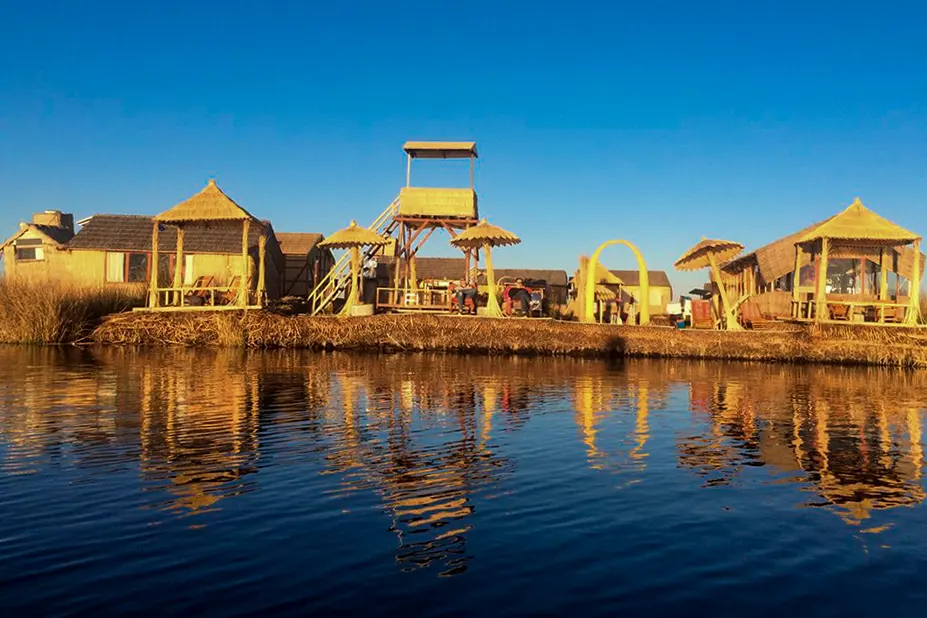
Evening light over reed islands on Lake Titicaca
Evening light in the supplied Uros collection; not a promised hotel-room view.
01 / PUNO CITY

Dinner nearby. An easier departure.

Useful for restaurants, museum visits and onward transport. Check the exact room’s noise, heating, hot water, breakfast time and reception arrangements.

02 / A LAKESIDE HOTEL

More horizon. More transfer planning.

Ask whether the booked room—not just the property—has a lake view. Check transport to town, dining hours and the total cost of extra journeys.

03 / A COMMUNITY STAY

A host and a different rhythm.

Agree on bathroom arrangements, bedding, meals, electricity, access and language. Rural hospitality can be the highlight of a visit when expectations are shared.

These are stay types to consider, not a catalogue of contracted hotels or confirmed amenities.

SMALL CHECKS. A MUCH BETTER TRIP.

The mistakes you
don’t need to make.

A practical checklist drawn from the supplied destination research. Open the moment that matters to you.

Before you pay 01
  1. Don’t buy a list of island names. Ask for boat time, time ashore, walking effort and the actual return window.
  2. Don’t compare incomplete prices. Put transfers, entrances, meals, optional boat rides and cancellation terms side by side.
  3. Don’t confuse an agency with the operator. Ask who runs the boat or vehicle, who guides you and whom to contact on the day.
  4. Don’t book “lake view” in the abstract. Confirm your exact room, distance from town, heating and breakfast time.
Before you set off 02
  1. Don’t treat Juliaca airport as Puno city. Reconfirm the flight, pickup, driver contact and destination.
  2. Don’t assume a ticket explains boarding. Save the exact dock or station, meeting time and luggage arrangements offline.
  3. Don’t leave the practical questions until the island. Ask about toilets, warm bedding, hot water, power, cash and a torch for the night.
  4. Don’t mistake calm photos for a weather forecast. Recheck conditions and the operator’s decision; wear a correctly fitted life jacket.
Before your next connection 03
  1. Don’t make a boat return and an important departure touch. Leave margin for changing lake conditions.
  2. Don’t add every nearby name to one route. Sillustani, Chucuito, Lampa and Tinajani need distinct travel plans.
  3. Don’t assume yesterday’s road report still applies. Ask your transport provider to reconfirm access close to departure.
  4. Don’t make Bolivia an improvised extra. Check your passport’s entry requirements, the intended crossing and the complete onward route before booking.
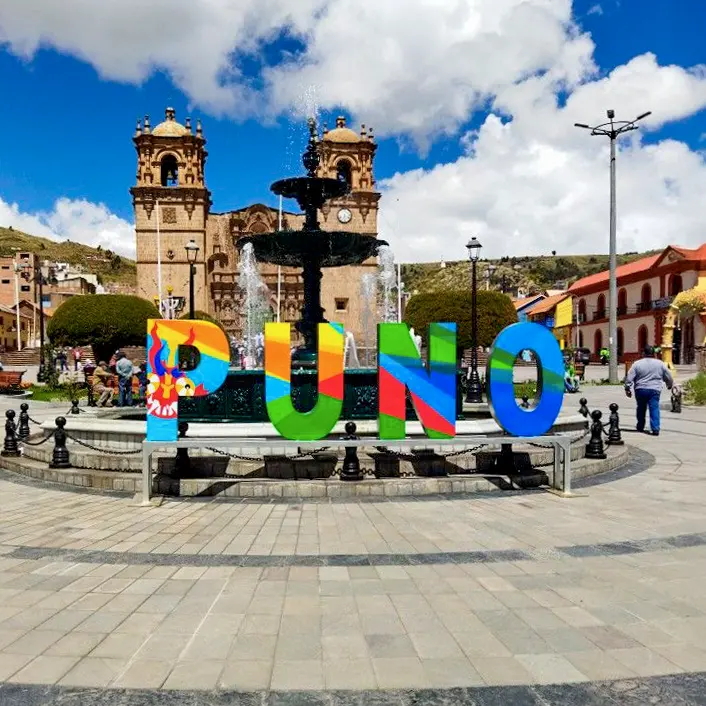
Colourful Puno lettering in the Plaza de Armas, with the cathedral behind

“The best souvenir?
A story that didn’t begin
with ‘if only we’d known’.”
A thought from Chasqui

READ BEFORE YOU ARRIVE

There’s more here
than meets the lens.

Three stories to carry
onto the boat.

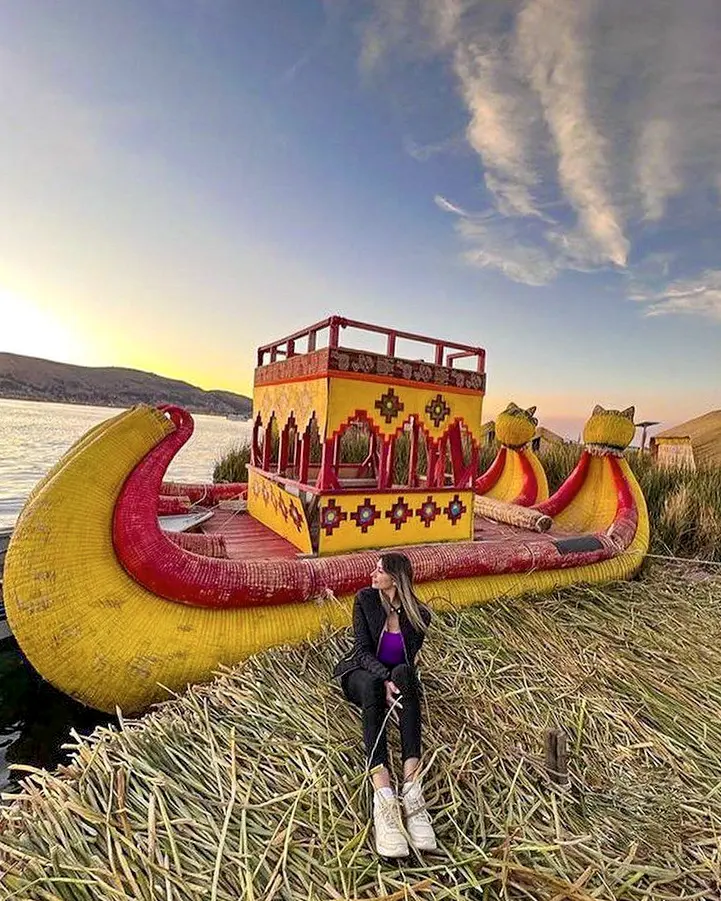
Traditional totora reed boat on Lake Titicaca

THE LAKE IN ANDEAN TRADITION

A beginning beneath
the blue.

In a well-known origin legend, Manco Cápac and Mama Ocllo emerge from Titicaca, sent by the Sun, and journey towards the place where Cusco will be founded. Looking across the water, you can understand why a landscape this vast could hold a story about beginnings.

Read the story note

This is a cultural origin narrative, not an archaeological account; versions differ. Ask a local guide how the story is told in their community. PROMPERÚ on the legend ↗

A view of life and totora construction on the Uros islands

AN ENCOUNTER, NOT JUST A STOP

Ask who made
the island.

A beautiful photograph records the surface. A good question opens the visit: how are the reeds renewed, who does the work, what changes with the seasons? Let the person welcoming you decide what they want to share. Listen before reaching for the camera.

A more thoughtful visit

Agree the visit and any optional activity with your host. Buying directly can be meaningful when you understand who made an item. A community is not a backdrop, and participation is an invitation—not a performance owed to visitors.

Golden sunset seen from Amantaní over Lake Titicaca

THE CASE FOR ONE MORE NIGHT

What happens after
the boat leaves?

Perhaps a conversation runs longer. Perhaps the sky changes while you are still at the table. An overnight stay gives those small possibilities some room. Your itinerary can include an empty space without having made a mistake.

Make that extra night work

Choose the host and facilities as carefully as the landscape. Confirm the return journey, keep warm layers close and leave a buffer before your next long-distance departure. This is an invitation to travel slowly, not a promise of a particular evening.

LESS SEARCHING ON THE SHORE

Take the useful
part with you.

Keep this HTML file on your device to read its text and photographs offline. External links and WhatsApp still need a connection. Your shortlist lasts for this page session; copy the prepared message to keep it.

Create my trip summary ↗

Your browser’s print window lets you choose a PDF destination. Nothing is uploaded by this page.

YOUR PUNO, AT YOUR PACE

A good trip starts
with a few
good choices.

Tell us what caught your eye. We’ll use your message to discuss the route, the practical details and what needs checking before you decide.

Your saved ideas

  • No ideas saved yet. Browse above, or tell us your interests below.

Chasqui’s planning conversation is free. Hotels, transport and activities have their own charges. We may earn a commission on services booked through us.

What matters most?
Make room between the moments.

Ask for manageable walks, clear boarding arrangements and realistic transfer time.

For adults 18+. No passport, payment details or medical information needed.

Review your message
Hello Chasqui, I would like help planning a visit to Puno and Lake Titicaca.

Opens a draft in WhatsApp. You decide whether to send it. This does not book a service or confirm availability.

KEEP THE JOURNEY CONNECTED

Puno and beyond.

Choose your next chapter
with the connection in mind.

NORTHWEST / CUSCO

From the lake
to the Sacred Valley.

Consider a daytime road journey or the Titicaca train, subject to operating dates. Give the journey its own day; Machu Picchu needs separate access planning.

Discover Cusco ↗
WEST / AREQUIPA & COLCA

White stone.
Wide canyon skies.

Ask about the exact route and high passes between regions. A scenic transfer is still a travel day, with its own weather and road conditions.

Discover Arequipa ↗
ACROSS THE BORDER / BOLIVIA

The lake has
another shore.

Bolivia is a separate international journey. Check entry requirements for your passport, border operations and onward transport before adding Copacabana or La Paz.

Include the onward journey in my enquiry ↗
Sources, photographs & editorial notes

Prepared for Chasqui on 25 October 2026. Historical and geographic context was checked against PROMPERÚ, UNESCO, MINCETUR, SERNANP and the municipal museum; practical details remain subject to change. Durations and combinations are editorial suggestions, not confirmed departures or medical clearance.

The destination-page structure was studied from Lonely Planet’s Peru page. This is an independent Chasqui guide with original copy; no affiliation or endorsement is implied.

Photographs were selected for relevance and visual quality. No verifiable global download ranking was available. Supplied photographs do not establish authorship, a recent inspection or specific hotel amenities.

Nine photographs received the approved natural Adobe treatment: automatic straightening, tonal balancing and the Color – Natural preset. No scenery, buildings or people were generated or replaced. Full-resolution edited masters are delivered separately; this page uses lighter WebP versions.

  • Six photographs from the supplied Chasqui Puno collection: Uros overview, Uros life, Puno sign, Plaza de Armas, Uros evening and reed boat. Originals preserved; publication permissions remain with the collection owner.
  • Taquile — Daniel Mendez Moran. Source photograph · CC BY-SA 4.0. Adapted with Adobe: automatic straighten, automatic tone and Color – Natural; web copy resized and encoded as WebP.
  • Sillustani — Diego Delso, delso.photo. Source photograph · CC BY-SA 4.0. Adapted with Adobe: automatic straighten, automatic tone and Color – Natural; web copy resized and encoded as WebP.
  • Amantani — Richard (RichardJames1990). Source photograph · CC BY 2.0. Adapted with Adobe: automatic straighten, automatic tone and Color – Natural; web copy resized and encoded as WebP.

The two CC BY-SA photographic derivatives remain available under CC BY-SA 4.0; that licence applies to those photographs, not to the Chasqui brand. Licence ↗

Piazzolla font licence
Copyright 2018 The Piazzolla Project Authors (https://github.com/huertatipografica/piazzolla)

This Font Software is licensed under the SIL Open Font License, Version 1.1.
This license is copied below, and is also available with a FAQ at:
http://scripts.sil.org/OFL


-----------------------------------------------------------
SIL OPEN FONT LICENSE Version 1.1 - 26 February 2007
-----------------------------------------------------------

PREAMBLE
The goals of the Open Font License (OFL) are to stimulate worldwide
development of collaborative font projects, to support the font creation
efforts of academic and linguistic communities, and to provide a free and
open framework in which fonts may be shared and improved in partnership
with others.

The OFL allows the licensed fonts to be used, studied, modified and
redistributed freely as long as they are not sold by themselves. The
fonts, including any derivative works, can be bundled, embedded, 
redistributed and/or sold with any software provided that any reserved
names are not used by derivative works. The fonts and derivatives,
however, cannot be released under any other type of license. The
requirement for fonts to remain under this license does not apply
to any document created using the fonts or their derivatives.

DEFINITIONS
"Font Software" refers to the set of files released by the Copyright
Holder(s) under this license and clearly marked as such. This may
include source files, build scripts and documentation.

"Reserved Font Name" refers to any names specified as such after the
copyright statement(s).

"Original Version" refers to the collection of Font Software components as
distributed by the Copyright Holder(s).

"Modified Version" refers to any derivative made by adding to, deleting,
or substituting -- in part or in whole -- any of the components of the
Original Version, by changing formats or by porting the Font Software to a
new environment.

"Author" refers to any designer, engineer, programmer, technical
writer or other person who contributed to the Font Software.

PERMISSION & CONDITIONS
Permission is hereby granted, free of charge, to any person obtaining
a copy of the Font Software, to use, study, copy, merge, embed, modify,
redistribute, and sell modified and unmodified copies of the Font
Software, subject to the following conditions:

1) Neither the Font Software nor any of its individual components,
in Original or Modified Versions, may be sold by itself.

2) Original or Modified Versions of the Font Software may be bundled,
redistributed and/or sold with any software, provided that each copy
contains the above copyright notice and this license. These can be
included either as stand-alone text files, human-readable headers or
in the appropriate machine-readable metadata fields within text or
binary files as long as those fields can be easily viewed by the user.

3) No Modified Version of the Font Software may use the Reserved Font
Name(s) unless explicit written permission is granted by the corresponding
Copyright Holder. This restriction only applies to the primary font name as
presented to the users.

4) The name(s) of the Copyright Holder(s) or the Author(s) of the Font
Software shall not be used to promote, endorse or advertise any
Modified Version, except to acknowledge the contribution(s) of the
Copyright Holder(s) and the Author(s) or with their explicit written
permission.

5) The Font Software, modified or unmodified, in part or in whole,
must be distributed entirely under this license, and must not be
distributed under any other license. The requirement for fonts to
remain under this license does not apply to any document created
using the Font Software.

TERMINATION
This license becomes null and void if any of the above conditions are
not met.

DISCLAIMER
THE FONT SOFTWARE IS PROVIDED "AS IS", WITHOUT WARRANTY OF ANY KIND,
EXPRESS OR IMPLIED, INCLUDING BUT NOT LIMITED TO ANY WARRANTIES OF
MERCHANTABILITY, FITNESS FOR A PARTICULAR PURPOSE AND NONINFRINGEMENT
OF COPYRIGHT, PATENT, TRADEMARK, OR OTHER RIGHT. IN NO EVENT SHALL THE
COPYRIGHT HOLDER BE LIABLE FOR ANY CLAIM, DAMAGES OR OTHER LIABILITY,
INCLUDING ANY GENERAL, SPECIAL, INDIRECT, INCIDENTAL, OR CONSEQUENTIAL
DAMAGES, WHETHER IN AN ACTION OF CONTRACT, TORT OR OTHERWISE, ARISING
FROM, OUT OF THE USE OR INABILITY TO USE THE FONT SOFTWARE OR FROM
OTHER DEALINGS IN THE FONT SOFTWARE.